
*CO2e, or carbon dioxide equivalent, is a term used to describe different greenhouse gases in a common unit. For any quantity and type of greenhouse gas, CO2e signifies the amount of CO2 which would have the equivalent global warming impact. And allows us to express a carbon footprint consisting of lots of different greenhouse gases as a single number.
Case studies
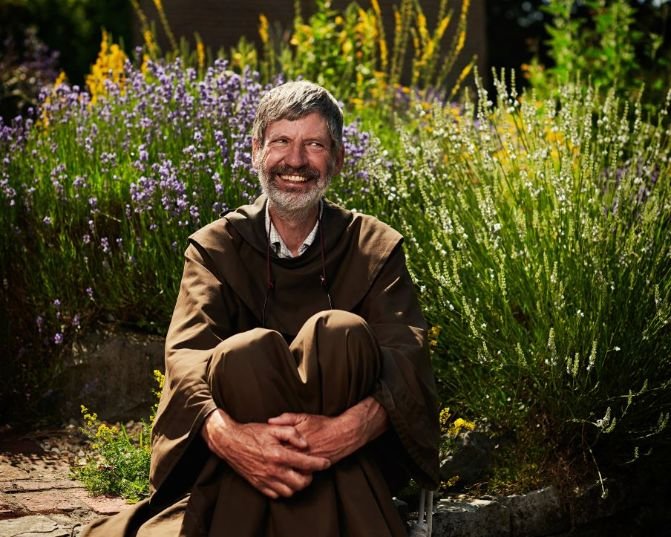
Hilfield Friary
Explore Hilfield Friary's solar sustainability project.
“Before you spend money, advice is very important”
Brother Hugh, Hilfield Friary
Project overview
In 2020, the Society of St. Francis invested over £18K to install solar panels on their buildings at Hilfield Friary in Dorset. Having already taken significant steps to reduce their environmental impact, these solar panels will reduce the Friary’s carbon footprint by a further 14 tonnes of CO2 a year – bringing them tantalisingly close to their net-zero goal.
Getting started
Franciscan brothers first arrived at the Hilfield Friary site in 1921 to establish a home of refuge and rehabilitation for displaced men in rural England. From this small beginning the Society of St Francis community has grown substantially.
Over the past decade, the Society of St. Francis community has recognised the growing and urgent need for individuals and organisations to reduce their carbon footprints. Not wanting to sit back and remain inactive to what they could see happening in the world around them, they made the decision to take action to reduce (and if possible eliminate) any negative impacts their community was having on the natural world.
Wider work
Since making this commitment, they have made significant changes to their diets, activities, energy-use, and land management practices. And in doing so have reduced the carbon footprint of their Friary by around 80%. These efforts have not gone unnoticed, in 2016 they achieved the first Gold Award in the Ecochurch Scheme. Now, at the time of writing, there are only 21 churches (of many denominations) with gold awards.
The first step they took was to convert all their buildings at Hilfield Friary to biomass heating, this significantly reduced their emissions and their reliance on fossil fuels (specifically LPG). Fuel for the boiler is locally sourced, some coming from the coppicing of their woodlands, some from Dorset Council’s own Hilfield Hill woodland which adjoins the Friary’s land, and some from a woodchip company.
And they didn’t stop there, they went on to install solar panels on the roof of their chapel, moved to a more vegetarian diet, began sowing wildflower meadows in available fields, re-established wetlands on their land, invested in electric vehicles and charging, and improved the insulation of their buildings and spaces.
But, even after all these changes, they found they still had a carbon footprint (around 21 tonnes of CO2e a year). It soon became clear that most of this footprint came from the electricity they were importing from the grid to power the Friary and its community. So, in their drive to get as close to net-zero as possible, they sought the help of Low Carbon Dorset to decarbonise this demand.
Solar PV
In the late autumn/early winter of 2020, with the support of a Low Carbon Dorset grant and free technical advice, the Society of St. Francis installed 29 kWp of solar PV across three of the buildings at the Hilfield Friary site. The 76 solar panels installed will reduce the Society’s energy-related emissions by an estimated 75% – increasing their total carbon footprint reduction to around 95%!
Combined, their panels will be generating over 30,000 kWh a year (that’s as much electricity as ten homes would use in one year in the UK!). The Friary’s community are expected to use around 50% of the electricity generated by their new panels, the remainder will be exported to the grid which they will receive a small income through the SEG scheme for.
This income (around £850 a year) combined with the savings they will make from not having to buy electricity from their supplier will save the Society of St. Francis around £3.2K a year. This means that, with the help of the grant, the panels can be expected to pay for themselves in under six years.
The steps taken at Hilfield Friary to minimise environmental impact really show how even old, hard-to-treat buildings in rural settings can get to net-zero.
Video
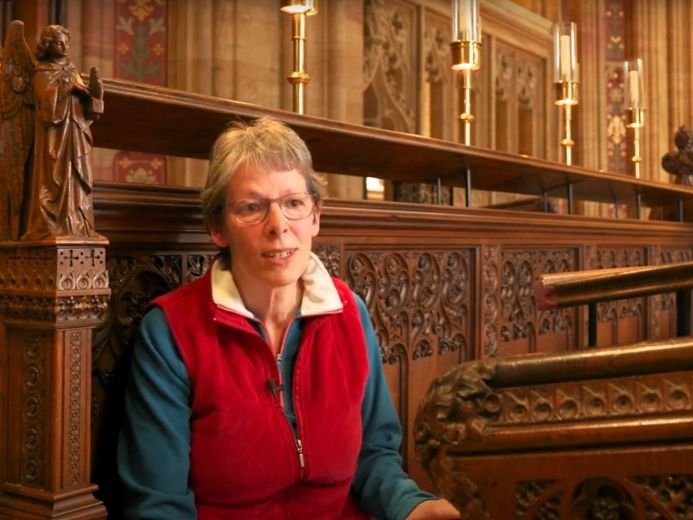
Sherborne Abbey
Learn more about the heat pumps on the Abbey roof.
"Here at Sherborne Abbey, we’re doing our little bit."
Sue, Sherborne Abbey

Washingpool Farm Shop
Find out how Washingpool cut energy costs with new fridges.
"We’re saving over £1K a month thanks to our fridge upgrades"
Simon, Washingpool Farm Shop
Project overview
In a bid to lower their carbon footprint and reduce their large energy bills, Washingpool Farm Shop replaced their old open-fronted fridge units with door-fronted equivalents.
This switch is expected to reduce the energy used for refrigeration in the shop by a huge 61%, saving around 28 tonnes of CO2e a year and over £15,000 in energy costs.
These savings will not only reduce the carbon emissions of the Farm Shop’s refrigeration but will also help them be more competitive with larger food retailers, allowing them to provide local produce with low food miles at an affordable price.
Getting started
In 2021, the management team at Washingpool Farm Shop decided to explore how they could tackle their huge energy bills. It was suspected that their 20-year-old inefficient open-fronted fridges were a major contributor to their £30,000 annual electricity spend.
To confirm these suspicions, a meter was put on one of the shop’s open-fronted fridges for a week. Readings from the meter showed that the fridge used a whopping 571 kWh of electricity over this short period. If we assume all three of the open-fronted fridge units in the shop use a similar amount of energy, and that this week was a typical week for the shop, this suggests that, combined, their open-fronted fridges were using around 89,000 kWh of electricity a year! To put this into perspective, using the average electricity price from the time the readings were taken (Mar 21), these three fridges were costing Washingpool Farm Shop around £12,500 a year to run. The recent energy price rises mean this figure would now (May 22) be more like £25,000 a year.
Refrigeration is a huge source of carbon emissions across the whole of the food retail sector and is not isolated to Washingpool Farm Shop. The use of open-fronted display fridges is extremely inefficient and consumes vast amounts of energy.
A proven way of tackling the crippling costs and emissions associated with refrigeration is to simply switch open-fronted fridges for fridges with doors. By adding a door, the fridge has a much smaller space to keep cool and requires much less energy to run. According to fridge manufacturer Arneg, potential savings of 61% can be achieved by swapping to their Osaka door-fronted units. For Washingpool Farm Shop, a 61% energy reduction could be as much as 54,000 kWh a year, saving the shop over £15,000 in energy costs and an estimated 28 tonnes of CO2e a year.
The introduction of door-fronted units only requires a minor change in behaviour, the opening of a door to access cold products, but can have a major impact on emissions and energy costs. According to Business Waste, if this change was adopted by all of the UK’s supermarkets millions of kilowatts of electricity could be saved.
Other measures
In addition to the change in their fridges, Washingpool Farm Shop had previously installed solar panels on their roof. These panels are helping decarbonise the shop’s electricity demand and reduce their electricity bills.
It was also recommended, as part of the free advice provided to the Farm Shop by Low Carbon Dorset, that further energy savings could be achieved by improving the insulation of their building. This will mean less energy is needed to heat the shop – reducing both their carbon footprint and energy costs.
Any heat that is needed is currently provided by LPG heaters, to reduce their reliance on fossil fuels the Farm Shop could install an air-source heat pump system. Heat pumps use electricity to move heat from outside a building into it and can be very efficient (300-500%). Paybacks for heat pumps depend on circumstances and the heating system they are replacing – and can range from anything between 4 and 20 years. Properties off the gas-grid like Washingpool Farm Shop can expect to be at the lower end of this range and those on mains-gas the higher.
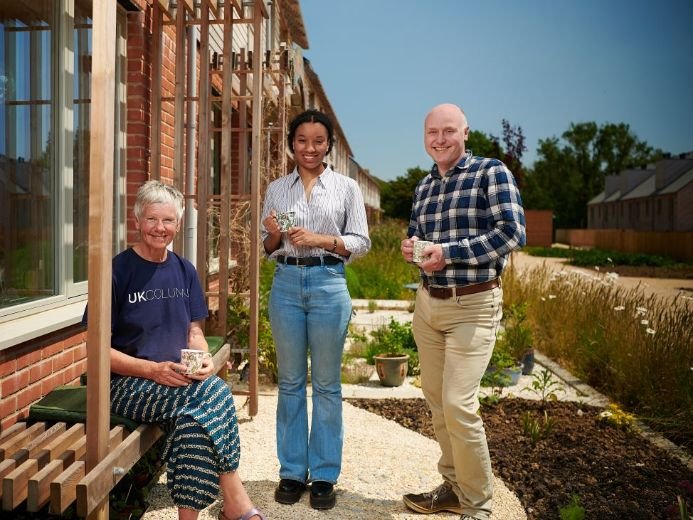
Hazelmead
Hear from this eco co-housing development in Bridport.
"Solar on one roof also benefits people living in different houses."
Damon, Cepro
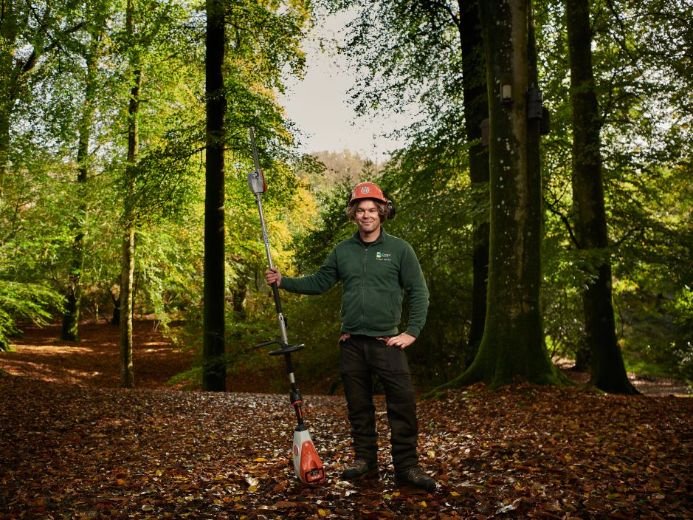
Dorset Council Greenspace Team
How solar panels and battery tools cut emissions.
"Our new electric tools have been a game changer for our team"
Matt, Dorset Council
Project overview
In 2021, Dorset Council’s Coast and Greenspace Service replaced nearly all their two-stroke petrol engine hand tools with innovative battery driven equivalents. This switch will reduce carbon emissions, noise, local air pollution, vibration risks for users and fuel costs.
To ensure maximum carbon and cost savings, Dorset Council also decided to install solar panels on the roof of the depot where the battery packs for the new tools will be recharged. By generating their own electricity on site, the council can eliminate the carbon emissions from their hand tools and save an estimated 43 tonnes of CO2e a year and as much as £10,000 in annual fuel costs.
Getting started
For generations, two-stroke power tools have played a vital role in the grounds-maintenance work undertaken by councils across the UK, and Dorset Council is no different. The council’s Greenspace team relies heavily on these tools to successfully manage many of Dorset’s countryside public assets. These assets include over 40 countryside sites, nearly 3,000 miles of public rights of way, multiple long distance national trails, and nearly 5,000 miles of highway verge.
But these tools have major drawbacks – they are very inefficient and produce hazardous emissions, including CO2. They are also noisy and can cause health problems for the operators through prolonged exposure to the vibrations they generate.
Battery powered tools
Up until very recently, there have been limited alternatives available. Although battery tools have been around for some years it is only recently that larger more robust items suitable for the heavy use required by local authorities have become available.
Dorset Council were quick to embrace the advancements being made in this area and were keen to become one of the first councils to replace their petrol tools with innovative battery alternatives.
It’s estimated that the council’s Greenspace team were using around 6,660 litres of petrol a year to power their two-stroke hand tools. But how do the battery alternatives compare? It is expected that the rangers will be able to get the same use out of one charge of the battery powered tools as they would out of three litres of petrol in their two-stroke equivalents. This means they can expect to save an estimated 17 tonnes of CO2e a year and between £5,000 and £10,000 in fuel costs by switching. The new battery powered tools, purchased from the Stihl range, will also be much more efficient as petrol tools only operate at about 30% efficiency because of heat loss and idling.
Battery powered tools
Below is a full list of the tools, attachments, batteries and charging systems purchased by Dorset Council’s Greenspace Service, with the help of Low Carbon Dorset, to replace their two-stroke hand tools with battery powered alternatives.
- Stihl Cordless Brush cutter Stihl HSA 94 R Hedge trimmer tool
- Stihl HLA Cordless Hedge Trimmer
- Stihl HLA Cordless Hedge Trimmer
- Stihl BGA Cordless Blower
- Stihl BGA Cordless Blower
- Stihl MSA 220 C-B Cordless Chainsaw
- Stihl MSA 161 T Arborist chainsaw
- Stihl HTA 85 Cordless Pole Pruner
- Stihl KMA130R Cordless Kombi Engine
- Stihl HT-KM Kombi Pole Pruner
- Stihl HL-KM 145 Long Reach Hedge Trimmer
- Stihl BG-KM Blower
- Stihl FS-KM Kombi Brush cutter Attachment
- Stihl AP Battery
- Stihl AR Backpack Battery
- Stihl AL500 Hi speed Charger
Solar PV
To maximise the environmental and financial savings of their new battery powered tools, Dorset Council also installed a 53 kWp solar PV array on the roof of their depot at Moors Valley Country Park where most of the new battery packs will be recharged.
By generating their own electricity on site, the council can make sure they are using clean energy to charge the tools’ batteries whilst also reducing the carbon footprint of the whole site.
The solar PV is expected to generate just under 50,000 kilowatt hours (kWh) a year – recharging of the battery powered tools will use around 800 kWh of this with the rest either being used on site or exported to the grid.
The solar PV array at Moors Valley will save a further 26 tonnes of CO2e a year and will increase the renewable energy capacity here in Dorset.
Financial savings
In total, Dorset Council purchased 432 battery powered hand tools including hedge trimmers, blowers, pole pruners, strimmers and chainsaws (with attachments, batteries and charging systems) at a cost of £115,500, and a 54 kWp solar PV system at a cost of £34,500. Low Carbon Dorset was able to provide a grant to fund 40% of the project bringing the amount the council had to invest down to £90,000.
** The financial savings made from this project will depend on several factors including where the energy is sourced to charge the tools and the cost of the petrol they will be replacing. If the Greenspace team can charge their new tools using only the energy they generate from their solar panels, it can be assumed, if using the current average price of petrol (£1.61 per litre), that this project will pay for itself in as little as eight and a half years – saving the council on average £10,700 a year in fuel costs.
Video
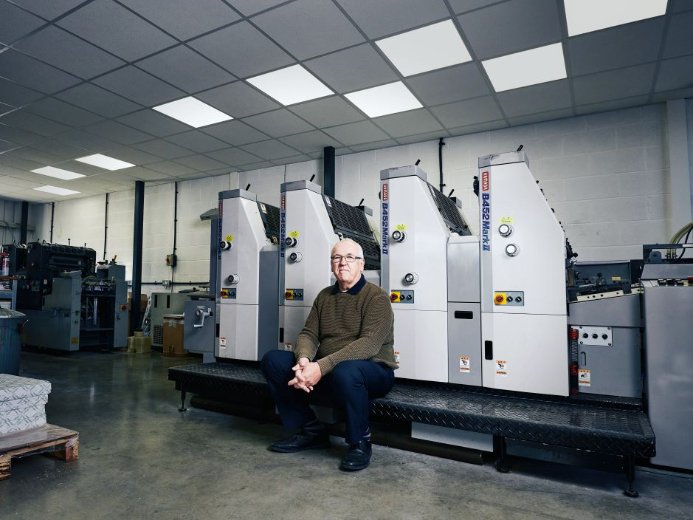
Print Team
Discover how Print Team Ltd's solar project is slashing costs and emissions.
"We’re always looking at ways to improve the environment."
Chris, Print Team
Project overview
Print Team is a family-run company who supply in-house printing, from small digital runs to large litho runs, from their customised factory in Portland. In a bid to reduce the environmental and financial impact of their high electricity demand Print Team installed 10.2kWp of solar PV on their factory’s south-west facing roof.
Getting started
Prior to contacting Low Carbon Dorset, Print Team had already taken significant steps to improve the energy and thermal efficiency of their building. These steps included adding to existing wall insulation, switching all lighting to LEDs, and installing a central electricity kill switch to make sure no energy is wasted by machines being left on when not being used. The switch works by turning off all but a tiny proportion of the equipment (security alarms, computer servers, internet connection) and the switch is operated upon exiting the building.
So, with these first steps taken it was clear that any efforts to reduce their emissions further would need to focus on alternative methods of electricity generation.
Solar PV
With a south-west facing roof and high daytime energy demand it was clear that solar PV would be the company’s most financially viable renewable option.
Print Team opted to install the most PV possible on their roof, this was just over 10kWp. It was estimated that around 70% of the electricity generated by the panels would be used by Print Team, and the remaining 30% would be exported to the grid. Although the Feed-In-Tariff is no longer available Print Team will receive some money for exporting to the grid thanks to the government’s smart export guarantee scheme (SEGs). The amount they will receive is determined by the market and around 5.5p/kWh is currently the best rate (January 2021).
By installing solar PV it is estimated that Print Team will save just under £1k a year in electricity costs, and will reduce their carbon footprint by just under 40%. With the help of the Low Carbon Dorset grant the panels will pay for themselves in 5.7 years, leaving Print Team with much lower, more sustainable energy costs going forward.
*CO2e, or carbon dioxide equivalent, is a term used to describe different greenhouse gases in a common unit. For any quantity and type of greenhouse gas, CO2e signifies the amount of CO2 which would have the equivalent global warming impact. And allows us to express a carbon footprint consisting of lots of different greenhouse gases as a single number.
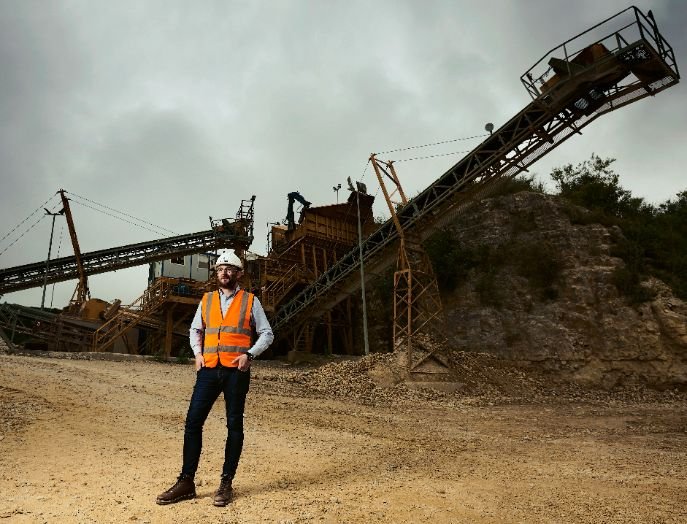
Project overview
Throughout 2019 and 2020, as part of a wider drive to reduce their carbon footprint and energy costs, Suttle Stone Quarries installed over 60 kWp of solar PV at two of their sites in Dorset.
The project, that was carried out over two phases, also included the installation of LED lighting for their workshop. Combined, these measures will save an estimated 31 tonnes of CO2e a year and will reduce Suttles’ annual energy bills by around £6.8K.
It’s expected that this project will pay for itself in just four and a half years!
Getting started
Since acquiring Swanworth Quarry in 2011, Suttles has been making significant progress in reducing the environmental impact of their operations. The Dorset based firm has already invested in the electrification of a large part of their vehicle fleet. In 2019, they purchased 13 electric and hybrid vehicles – reducing their footprint by an estimated 30 tonnes of CO2 a year. They have also converted most of their power-hungry diesel machinery to electric, including the large crusher at their Swanworth site.
By making this switch to electric, Suttles were in an excellent position to decarbonise their operations and reduce their reliance on fossil fuels. By generating their own electricity on-site renewably, rather than importing electricity from the grid, Suttles could make significant savings in both carbon and costs. So, with help from Low Carbon Dorset, they began mapping out their electricity demand (half hour by half hour) to understand exactly how much solar PV they would need to make the best possible business case.
Solar PV panels
In 2019, with the help of a Low Carbon Dorset grant, Suttles installed a 49 kWp solar PV array on the roof of their Swanworth workshop. It is anticipated that the 120 panels installed will generate around 41,500 kWh a year, but in fact, in 2020 they exceeded this by an extra 7,000 kWh!
Financial savings made from solar PV vary depending on how much of the energy you generate you can use yourself. Companies that can use a large amount of the electricity they generate make the biggest savings as they no longer need to buy this electricity from their energy supplier.
The Suttles PV project is a great example of this as their peak demand for electricity is during daylight hours when a solar array would be generating the most electricity. It’s expected that Suttles will use about 75% of the energy they generate at Swanworth, saving them around £4K a year on electricity costs and reducing their carbon emissions by 21 tonnes of CO2e a year.
After seeing the financial and environmental benefits of one solar array, Suttles decided to apply for a second grant from Low Carbon Dorset to install a smaller array (11 kWp) at their nearby Dawkins Road site. It is expected that they will use around 94% of the energy they generate at this site, bringing the payback period for the panels down to just 4 years! This PV now powers the workshop and some of their electric vehicle charging and will save them a further 6 tonnes of CO2e a year.
LED lighting
Whilst installing PV at their Swanworth site, Suttles also decided to replace 21 old light fittings in their workshop with highly efficient LED lights. Switching to LEDs is a quick and relatively cheap way to reduce electricity bills and carbon emissions.
This switch to LEDs is expected to save Suttles around £900 a year in electricity costs, and with the help of a 40% grant will pay for itself in just 2 years.
Next steps
Now Suttles have installed solar PV at both of their Dorset sites, they are hoping to further decarbonise their operations through the electrification of both their mobile plant and van fleet. This will help them to further utilise the electricity they are now generating on site.
Video

Project overview
FABS (Friends at Broadmayne School) is the Parent Teacher and Friends Association of Broadmayne First School. As a registered charity, they bring together parents, teachers and the wider community to help raise funds and provide support for the school. They are also responsible for the day-to-day running of the school’s open-air swimming pool.
In a bid to reduce the associated emissions and running costs of the swimming pool, FABS secured funding from Low Carbon Dorset to install solar PV panels on the roof of Broadmayne First School. These panels are expected to generate just over 3,000 kWh of electricity each year, which will help reduce running costs and cut the pool’s carbon footprint by over 20%.
Getting started
The heating and running of swimming pools is often very costly and energy intensive. In 2018, when Broadmayne First School began making plans to improve their pool’s plant room and storage building, they decided to also investigate ways they could tackle these high costs and emissions.
The Broadmayne pool is 12m by 7m with an average depth of around 1m and is available for use by the school in term time and the wider public in the summer holidays. As a result, it is heated from June until mid-September by a gas boiler, and from May to September they use a 750-W electric pump to circulate the water.
The school’s increased need for energy in the summer to run the pump makes an obvious case for installing solar panels – with solar PV generating the most energy when the pool’s demand is at its peak.
Solar PV
Prior to contacting Low Carbon Dorset for support, the school had planned to install solar panels on their new poolside building. However, a site visit from Low Carbon Dorset immediately flagged that shading from near-by trees would heavily impact on the amount of energy that could be generated from these panels. With the help of the Low Carbon Dorset technical officer, a more suitable location was identified (on the neighbouring school building), and a grant was awarded to help cover 40% of the costs of the installation and commissioning of the panels.
After structural strengthening work was conducted, a 3.72kWp solar PV array was installed on the roof of Broadmayne First School. It is anticipated that this array will generate 3,035 kWh a year*, this electricity will power the pool’s pump through the summer months, and when the pump is not in use will provide power to the school. It is estimated that the pool and school will use around 90% of the power it generates, saving them on average just under £400 a year. This means that, with the help of the grant, the panels will pay for themselves in 7 years – this is 5 years quicker than without the grant!
By generating their own power renewably, it is estimated that the school will save around 1.6 tonnes of CO2e a year, reducing the carbon footprint of the pool by 21%. And the reduction in their energy bills as a result helps secure the future of this highly valued community asset.
The installation of the panels has also provided an excellent opportunity for pupils to learn about renewable energy and fits in well with the school’s wider work around sustainability.
Update: Since writing, FABS has notified us that in the first 13 months after installing, the solar panels on Broadmayne First School’s roof generated 4,604 kWh of electricity. This far exceed the estimated annual generation of 3,035 kWh, and saved them around £640 – over £200 more than they were expecting!
Other recommendations
As the heating of the pool is a major contributor of the school’s greenhouse gas emissions during summer, it was recommended that pool-related efficiency measures should be the first thing to consider when looking at reducing emissions.
Recommended efficiency measures included turning the temperature of the pool down. This is by far and away the largest, and simplest, potential efficiency saving available. Even a small reduction in temperature can lead to large savings.
Another recommended measure was the use of a pool cover. This would conserve energy in two ways, firstly it stops heat leaving the surface of the water, and secondly it reduces evaporation from the surface which is a large cause of heat loss. The pool cover should be kept on whenever there isn’t direct sunlight on at least half of the pool, when it is windy, or when the air is especially dry.
It was also recommended that they explore swapping the pool’s heating system from mains gas to an air-source-heat pump (ASHP). ASHPs use electricity to move heat, rather than to generate it, and therefore can use electricity far more efficiently than traditional electric heating. A benefit of an electric heating source is that it will mean nearly all the electricity generated by the school’s solar panels will be used, ensuring the largest possible financial savings. A rough cost to install an 18kW ASHP (the size needed for Broadmayne school’s pool) is £4.5K, and annual savings to the school are likely to be around £250 a year. The swap to a heat pump would also result in large emissions savings, and would nearly halve the pool’s carbon footprint, saving over 3 tonnes of CO2e a year.
Video
*CO2e, or carbon dioxide equivalent, is a term used to describe different greenhouse gases in a common unit. For any quantity and type of greenhouse gas, CO2e signifies the amount of CO2 which would have the equivalent global warming impact. And allows us to express a carbon footprint consisting of lots of different greenhouse gases as a single number.
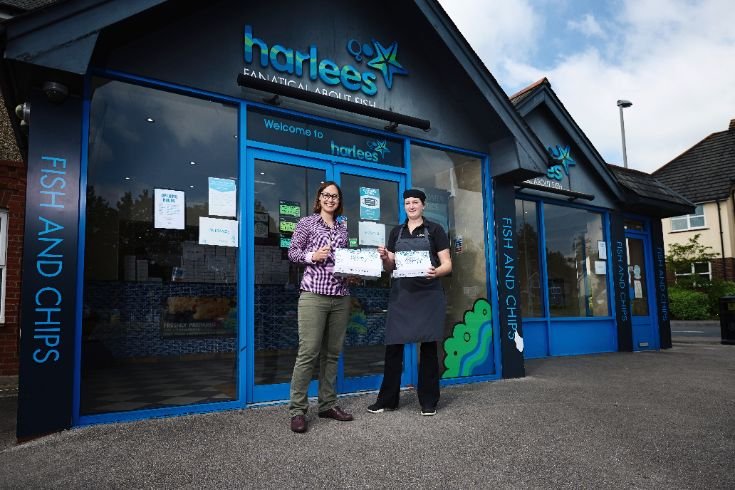
Project overview
Harlees is a family run fish and chips business with seven locations across Dorset and Wiltshire. When a fryer needed replacing at their Verwood shop, Harlees decided to use this opportunity to reduce their carbon footprint. Instead of replacing like-for-like, Harlees invested in a high efficiency replacement fryer – this upgrade will reduce their gas consumption by an estimated 30%.
And they didn’t stop there, they also installed as much solar PV as their roof space would allow (6kWp) to help tackle the emissions from their lighting and refrigeration.
Combined these measures are expected to save around 11 tonnes of CO2e, and over £2K in energy bills, each year.
Getting started,
When it became apparent in 2019 that one of Harlees’ fryers needed replacing, the Dorset based firm decided to reach out to Low Carbon Dorset to explore whether they could use this opportunity to reduce their carbon emissions.
A full energy review of Harlees’ Verwood shop by Low Carbon Dorset’s technical officer Erik highlighted the key areas Harlees would need to focus on to reduce their emissions. By identifying the shop’s three biggest energy demands, their frying range, refrigeration and lighting, Erik was then able to recommend steps that could be taken to reduce these.
Fryer
It was quickly evident that the main energy demand of the business was their fish and chip fryer, consuming over 130,000 kWh of gas each year. At 16 years old, the fryer had already outlived its expected life span of 15 years. And since being installed in 2006 the efficiency of frying ranges has significantly improved.
A grant from Low Carbon Dorset covering 25% of the costs of replacing the fryer allowed Harlees to invest in a more advanced high efficiency fryer which would have previously been beyond their budget. The new Kiremko fryer is expected to be 25% more efficient than the fryer it has replaced and will use around 30% less gas. It will also be more efficient than cheaper modern fryers on the market. By making this switch, rather than either continuing with their old fryer or buying a less expensive new one, Harlees will be saving an estimated eight tonnes of CO2e every year and can expect around £1.4K off their annual gas bill.
Solar PV
In order to tackle emissions from their lights and refrigeration units, Harlees decided to invest in a 6kWp solar PV array for their shop roof. This was the maximum number of panels they could put on the shop’s available roof space and will save the business just under three tonnes of CO2e a year.
It is expected that Harlees will be able to use around 80% of the electricity they generate, as much of their demand is during daylight hours with increased traffic in the summer months. The remaining 20% will be exported to the grid, and thanks to the Smart Export Guarantee scheme (SEGs) will generate them a small amount of income. Factoring in both the savings they will make on their electricity bills and the money they will receive for exporting, it is expected that the solar PV will save the business around £675 a year.
With the help of a 25% grant from Low Carbon Dorset, it is anticipated that the solar panels will take around seven years to pay for themselves.
After the success of installing PV at their Verwood shop, Harlees are now considering installing arrays at all their locations.
Other recommendations
During the site visit of Harlees’ shop, Low Carbon Dorset were also able to recommend some basic, relatively low-cost, measures that could help improve the energy efficiency of the shop.
One recommendation was to fit a seven-day timer switch on the shop’s drink display fridges. The items in these fridges do not need to be kept cold all the time they just need to be chilled during shop opening hours. However, to make sure they had cold drinks available, Harlees were running these fridges around the clock. By fitting a timer switch they were able to set the fridges to come on one hour before the shop opens and turn off half an hour before closing. This way chilled drinks were always available to customers, but they weren’t powering fridges unnecessarily. Harlees have since rolled out timers at all their locations.
For the walk-in fridges that are required to run 24 hours a day, it was recommended that Harlees install endocube type devices. These are simple devices that consist of a plastic casing containing a blob of wax that clamps around the temperature probe and stops it reacting to the small inrush of warm air that occurs when fridge doors are opened. As a result, the fridge will work more efficiently and save energy.
Another simple step recommended to Harlees to reduce energy use was to insulate their hot water pipes. This relatively cheap measure can lead to savings, minimise heat loss, and reduce the heat in the kitchen during summer months when the boiler is running to provide hot water.
Video
*CO2e, or carbon dioxide equivalent, is a term used to describe different greenhouse gases in a common unit. For any quantity and type of greenhouse gas, CO2e signifies the amount of CO2 which would have the equivalent global warming impact. And allows us to express a carbon footprint consisting of lots of different greenhouse gases as a single number.
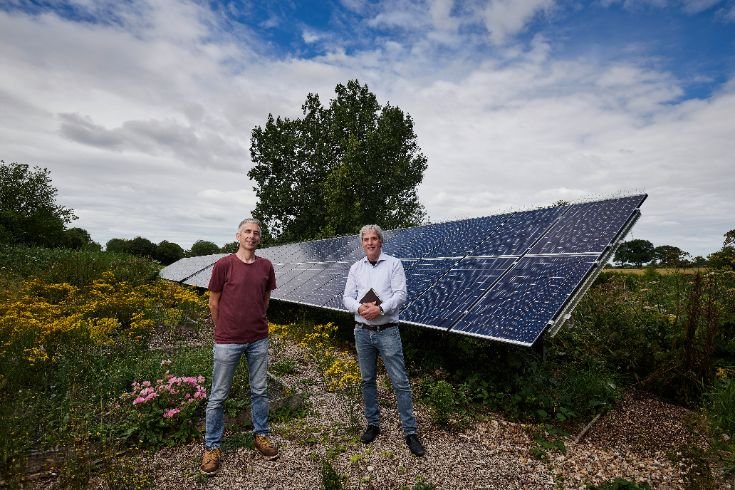
Springhead Trust
Learn how this historic site has boosted its energy efficiency.
Project overview
Springhead Trust is a small Dorset based charity. In 2020, with the help of a Low Carbon Dorset grant the charity improved the energy efficiency of their site in Fontmell Magna. The trust’s holistic whole-building approach saw the insulation of roof, ceiling and floor insulation, LEDs and improved window glazing. Combined these measures will reduce their emissions by 7 tonnes of CO2e a year and significantly lower their heating demand. This project is an excellent demonstration of how the energy efficiency of old buildings can be significantly improved without threatening their historic integrity.
Getting started
From their site in Fontmell Magna, Springhead Trust run a rural centre for creative and sustainable living. The charity’s mission is to encourage people of all ages and backgrounds to experience and value the rural environment and to learn about the sustainable use of natural resources.
A key objective at Springhead is to practice and demonstrate techniques and principles associated with a more sustainable way of life. Prior to seeking support from Low Carbon Dorset the trust had already invested in a number of renewable energy measures. These included a hydro turbine which takes advantage of the year-round flow of water from the lake at Springhead and a ground mounted solar PV array.
However, their inefficient and draughty buildings were proving to be a big challenge on their road to becoming net-zero and this is where Low Carbon Dorset was able to help. We were able to recommend and support several bespoke measures that would help improve the energy efficiency of their buildings and reduce their emissions.
Insulation
Part of Springhead Trust’s holistic approach to energy efficiency involved installing a range of roof, ceiling and floor insulation to improve the thermal efficiency of their buildings. This new insulation will help retain warmth in the winter, and keep the buildings cool in the summer. Due to the historic nature of some of the buildings, access to certain floor areas to insulate proved difficult. However, installers were able to work around this and instead insulate from below and by doing so demonstrated that even old historic buildings can benefit from simple energy efficiency measures – and in an environmentally friendly way too. Springhead were keen for their insulation to be as eco-friendly as possible, so, where feasible they used a Knauff earth wool which is manufactured from recycled glass.
LEDs
To reduce their energy demand Springhead replaced old inefficient lighting with 139 highly efficient LEDs. This measure alone will save the trust just over £1,000 a year in reduced electricity bills.
Improved window glazing
The Springhead site dates back to the 1600s and the buildings have significant historic importance. This rules out replacing existing single glazed windows with newer units. However, the Trust were able to find a more bespoke solution to prevent heat loss through their old windows by simply installing lightweight aluminium secondary glazing. This additional glazing is installed inside the existing windows, posing very little aesthetic impact whilst dramatically improving the windows’ thermal efficiency.
Next steps
The Trust is not stopping here, they have future plans to further reduce their site’s carbon footprint by installing a water-source heat pump and storage batteries to optimise output from their solar panels.
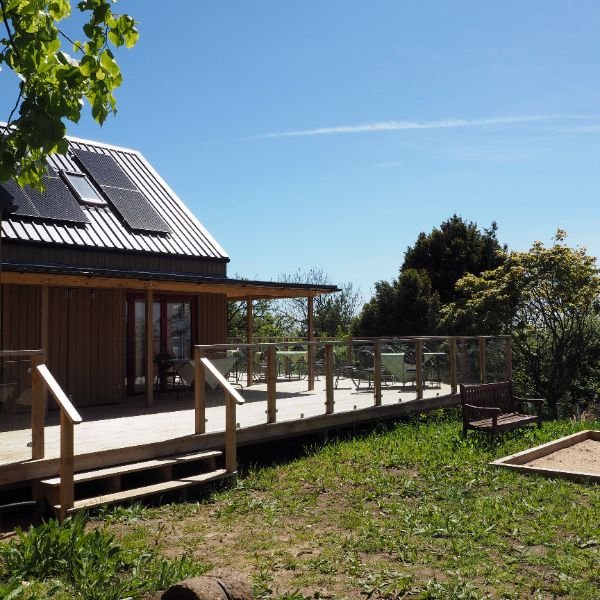
Othona West Dorset
Explore this scenic seaside retreat’s new low-carbon studio.
Project overview
Othona West Dorset is a seaside spiritual retreat which combines the experience of community life with the arts, nature, contemplation and relaxation.
In 2019, the charity built a new multi-purpose studio at their site in Burton Bradstock. In a bid to make their new studio as near to carbon neutral as possible, Othona installed solar PV, mechanical ventilation with heat recovery (MVHR) and an air source heat pump.
Combined, these measures will save around 15 tonnes of CO2e and £3.9k in energy costs each year and bring the Othona Community closer to their goal of being carbon-neutral by 2030.
Getting started
Othona West Dorset has been running for over 50 years as a centre for community and spirituality. It is located on the Jurassic coast in seven acres of grounds, managed sustainably to encourage biodiversity and wildlife. The site already benefits from solar PV on several buildings, and the charity has a firm commitment to living sustainably.
In 2018, the charity began plans to build a new multipurpose studio, a year-round resource for Othona’s residential visitors and individuals and groups from the local community.
Keen to make the new building as environmentally friendly as possible, Othona reached out to Low Carbon Dorset for advice and financial support. Plans for the build already included several low-carbon measures, including solar PV, an air-source heat pump, and mechanical ventilation with heat recovery (MVHR). However, a site visit by Low Carbon Dorset identified the opportunity to install significantly more solar PV on the new studio’s roof space. And we were able to provide a grant to help cover the costs of Othona’s proposed low-carbon measures, their additional solar panels, and an upgrade of their electricity supply.
Solar PV
A 12kWp solar PV array was included in the build and will generate around 9,413 kWh of electricity a year. It is estimated that Othona will use at least 70% of the energy they generate, this alone will save them around £1K a year in electricity costs. Any electricity they don’t use will be exported to the Grid in return for payment from their energy supplier thanks to the Smart Export Guarantee (SEG) scheme. Exporters can currently (May 2021) expect between 2 to 5.6p per kWh.
With the help of the Low Carbon Dorset grant it is expected that it will take between five and six years for the panels to pay for themselves, without the grant this payback period would have been just under 10 years.
Mechanical Ventilation with Heat Recovery (MVHR)
In order to increase energy efficiency and reduce heat loss, new buildings are now designed and built with much lower levels of unwanted ventilation. However, having adequate ventilation in a building is important for lots of reasons. So, a mechanical ventilation with heat recovery (MVHR) system was installed to provide the right amount of clean, fresh air into the studio. By recovering the heat from the air it extracts, the MVHR can pre-warm the fresh air it pumps in to the building. This means less energy is needed to heat the building and it can reduce heating costs by around 25%. You can find a great explanation of how MVHR systems work on the Centre for Sustainable Energy website.
Air-source heat pump
In order to reduce their reliance on fossil fuels, Othona decided to install an air-source heat pump (ASHP) to provide the heating for their new studio. And thanks to their MVHR, which reduces the studio’s heating demand, they were able to install a smaller air-source heat pump.
By choosing to install an air-source heat pump (ASHP) and MVHR instead of an electric combi-boiler, Othona will save around £2,800 a year in energy costs.
Combined, Othona’s mixture of energy efficiency and renewable energy measures will save around 15 tonnes of CO2e and £3.9K in energy costs every year. It’s anticipated that, with the help of the Low Carbon Dorset grant, these measures will pay for themselves in just over 5 years.
Upgrade to electricity supply
Low Carbon Dorset also supported the upgrade of Othona’s electricity supply from single to three phase. This was an essential part of their long-term aim of becoming carbon neutral and was required by Western Power for connecting the Studio’s PV to the national grid. It will also enable Othona, among other things, to install electric car charging points in the future.
Other recommended measures
Several other measures were recommended by Low Carbon Dorset to reduce the carbon footprint of the Othona site. These measures included having a survey of all their existing buildings’ roof-space to identify where increased insulation is needed. Insulation can provide excellent low-cost carbon savings and drastically reduce heating bills.
Battery storage was also a possible recommendation for the future. Although battery storage is currently expensive in comparison with the savings offered from fitting it, this is likely to change in the next two to five years. When this happens many people and organisations that have previously fitted PV may choose to add storage to maximise the benefits they receive from their solar panels.
It was also recommended that any remaining old lights were switched to LEDs, and that an upgrade to double glazing was considered for any remaining single glazed windows or secondary glazing across the site.
Several other measures were recommended by Low Carbon Dorset to reduce the carbon footprint of the Othona site. These measures included having a survey of all their existing buildings’ roof-space to identify where increased insulation is needed. Insulation can provide excellent low-cost carbon savings and drastically reduce heating bills.
Battery storage was also a possible recommendation for the future. Although battery storage is currently expensive in comparison with the savings offered from fitting it, this is likely to change in the next two to five years. When this happens many people and organisations that have previously fitted PV may choose to add storage to maximise the benefits they receive from their solar panels.
It was also recommended that any remaining old lights were switched to LEDs, and that an upgrade to double glazing was considered for any remaining single glazed windows or secondary glazing across the site.
*CO2e, or carbon dioxide equivalent, is a term used to describe different greenhouse gases in a common unit. For any quantity and type of greenhouse gas, CO2e signifies the amount of CO2 which would have the equivalent global warming impact. And allows us to express a carbon footprint consisting of lots of different greenhouse gases as a single number.
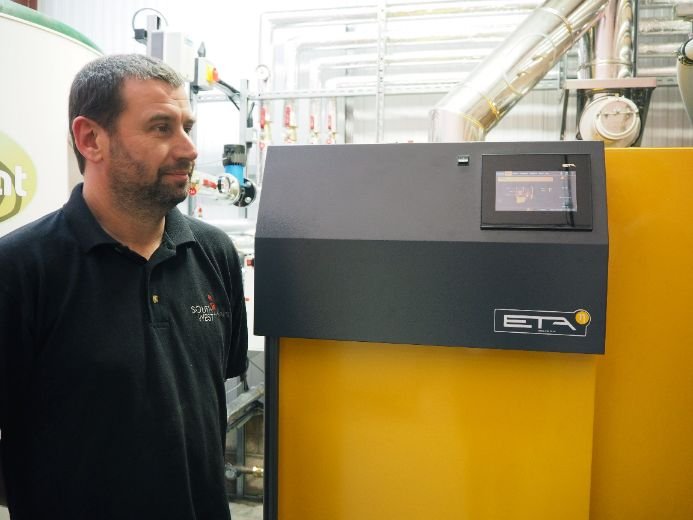
South West Packaging
See how South West Packaging has transformed its workspace with biomass heating.
Project overview
South West Packaging (SWP) is an independently owned corrugated packaging manufacturer, based in North Dorset. With only 8 basic electric heaters and extensive heat loss, the heating system and thermal efficiency of their factory and offices were in desperate need of upgrading.
In a bid to make their work place more comfortable, improve quality of storage, and reduce energy consumption, SWP installed a biomass heating system, and two fast-roller loading/unloading doors to minimise heat loss.
Getting started
After making the decision to explore the possibilities of a renewable energy heat source, SWP applied to Low Carbon Dorset for help to bring their project to life.
An initial energy report from Low Carbon Dorset provided SWP with a list of recommended measures that could help reduce their energy bills, improve their workspace and cut down on emissions. The report was packed with technical specifications, estimated return-on-investments, info on government subsidies and potential carbon savings.
Armed with this report SWP then set about prioritising which measures they wanted to install. A grant was available from Low Carbon Dorset to cover 40% of the project cost.
Biomass heating system
A 90-kW wood pellet boiler was installed in the main factory. Existing electric radiators were replaced with a blown air system using heat provided by the biomass boiler. Additional radiators were positioned in the offices and canteen area to utilise the heat provided.
A buffer tank and pellet hopper were also installed on the premises. This required the construction a concrete slab and internal building to accommodate this.
Fast roller loading/unloading doors
Two loading/unloading bay doors (previously regularly left open during operating hours) were replaced with quick up and down insulated doors to ensure heat retention in the building.
Other recommendations
With an extensive, and reasonably constant electricity demand and a large, unshaded, south-facing roof, solar PV was identified as an excellent fit for SWP. Due to budget constraints, and the company’s immediate requirement for heating, they decided not to proceed with this recommendation immediately. The opportunity for SWP to apply for a further grant from Low Carbon Dorset to carry out this recommendation will be available for the remaining duration of the programme.
A word from the wise
Here’s what Stuart Tracy (Sales Director) from South West Packaging had to say about their carbon reduction project:
The Boiler has made a world of difference, not only to our staff who now find the workplace a much more comfortable environment to work in, but the knock on effect to the machinery and glues we use. Keeping the factory at a steady temperature throughout the week has made the final product even better!
The green benefits of the boiler are also a big plus point to our customers. They are now buying an environmentally friendly product, which has also been produced as such.
The Low Carbon Dorset grant enabled the project to get underway. We had just invested in new machinery so would have installed electric heaters in the factory to get us over the last winter period, and probably not looked into the heating issue again for a couple of years.
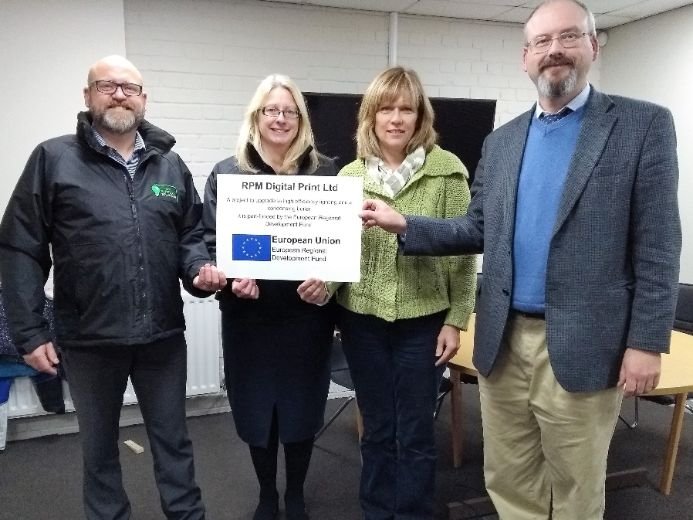
RPM Digital Print
Discover how RPM Digital Print Ltd is saving energy with LEDs and a new boiler.
Project overview
RPM Digital is a print and digital marketing company based in Wimborne, Dorset. In an effort to reduce their consumption of electricity and gas, RPM upgraded lighting throughout their offices to LEDs, and replaced an aging inefficient gas-combi boiler with a highly efficient condensing gas boiler.
Getting started
With an environmental management system already in place, RPM Digital base their business practices on working in an ethical and sustainable way. Aware that their premises were not as energy-efficient as they could be, but restricted by the costs of upgrading equipment, RPM contacted Low Carbon Dorset for support.
An initial energy report carried out by Low Carbon Dorset’s technical officer Erik, highlighted the carbon and cost savings that could be made from upgrading RPM’s lighting and gas-combi boiler. Within the report, alongside the recommended changes and potential savings, Erik outlined the likely cost of the project and payback periods.
With this information at hand RPM were able to plan their carbon reduction project according to their requirements and budget.
LED lighting
59 existing lights, mostly fluorescent tubes consisting of quadruple 18W, single 58W, or double 58W T8 fittings, were replaced with 39 highly efficient LED lights. Several of the existing lights were daylight tubes to help with quality control in the print works. These lights were replaced with LED daylight tubes. The replacement of the lights alone will make an estimated annual saving of 2.4 tonnes of CO2 / £600.
Boiler upgrade
Hot water and heating was previously supplied to the offices through a gas combi-boiler. This non-condensing boiler had a SEDBUK (Seasonal Efficiency of Domestic Boilers in the UK) efficiency rating of under 79%. By making a simple switch to a 90%+ efficient condensing gas boiler RPM will make savings on energy use and bills. These savings are estimated at 2.6 tonnes of CO2 and over £300 per year.
Other recommendations
Further recommendations made in the RPM Digital energy report included more investigation into the barriers for installing Solar PV on the factory roof. And a detailed assessment of the building’s heating, ventilation, and air conditioning (HVAC) system by a HVAC engineer to identify potential energy and carbon savings. RPM Digital can apply for further grants from Low Carbon Dorset to carry out these recommendations until the programme ends in 2020.
A word from the wise
Here’s what RPM Digital Print had to say about their project:
Installation of equipment
Boiler Installation – 1 day. LED Light Installation – 2 days. The installation caused very little disruption to operations.
Issues encountered
None. We did need to add a few LED lights into the print room (more than originally intended) as the light was quite condensed in areas, but this did not impact on the price or the installation.
Benefits
We will be saving money on our electricity bill (up to 80%), and hopefully gas as well. We are most excited about reducing our carbon footprint and demonstrating our commitment to our Environmental Objectives. The lighting coverage is also improved in areas by our new LEDs.
Lessons learned
I would not change anything, except starting the project earlier! The free Energy Efficiency report from Low Carbon Dorset was the most outstanding contribution. We received advice about every way in which we could improve our efficiency and reduce our carbon impact. You normally have to pay a lot of money for such a thorough consultation! We also received support from Low Carbon Dorset throughout the project, with unbiased and reliable advice which was very much appreciated.
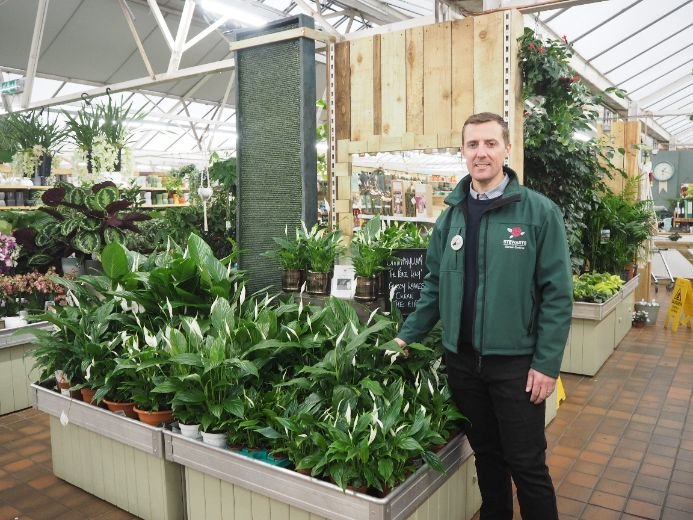
Stewarts Garden Centre
Learn how Stewarts Garden Centre is heating its glasshouse with renewable energy.
Project overview
Stewarts is a family run business in Dorset who run three garden centres, a nursery and a landscaping division. In a drive to become more environmentally and financially sustainable they installed 179kWp of solar PV on the roofs of their two Dorset garden centres, installed LED lighting at both sites, and invested in a ground-source heat pump and thermal screens for their new 8,000 sq m glasshouse.
Combined these measures reduced Stewarts’ footprint by around 450 tonnes of CO2e a year and will save about £50k in electricity costs each year.
Getting started
The Stewarts team were first introduced to Low Carbon Dorset in early 2019 with a clear objective to reduce their company’s carbon footprint. They had already begun planning for a new 8,000sq m glass house at their site in Broomhill and were keen to minimise its environmental impact and reduce that of their existing sites.
Ground source heat pump
The new glass house will have a large heating demand and Stewarts were eager to find an alternative fuel source to oil. But they soon discovered that a low-carbon alternative would cost them over £250k more. A grant from Low Carbon Dorset made this option more affordable, and they were able to change their plans to incorporate a 500-kW ground-source heat pump (GSHP) in place of an oil boiler. The funding also supported the installation of thermal screens in the glass house to reduce heat loss. These panels will reduce the heating demand in the building by 30%.
Solar PV and LEDs
Stewarts’ carbon reduction efforts stretched beyond just their Broomhill site, and with the technical and financial help of Low Carbon Dorset they were also able to install 279kWp of solar PV, a fast action roller door, and LED lights across two garden centres. Combined these measures alone will save Stewarts around £50k a year in electricity costs and should pay for themselves in just over 5 years.
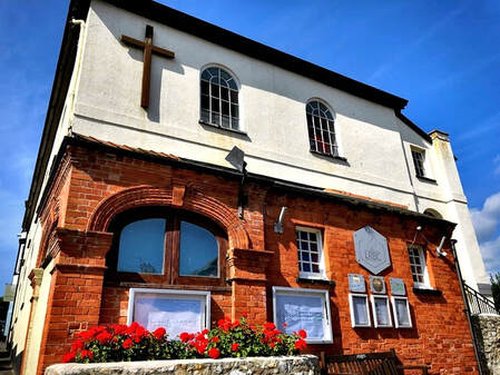
Lyme Regis Baptist Church
Discover the green initiatives at Lyme Regis Baptist Church.
Project overview
Centuries old, the Lyme Regis Baptist Church and its community are leading the way in the green energy revolution, with environmental considerations embedded deep within their values. Only the second church in the UK to be awarded the Bronze Eco Church Award (beaten only by St. Paul’s Cathedral), the church currently holds a Silver certification and is always on the lookout for ways to further reduce their environmental impact.
With the help of a Low Carbon Dorset grant, the Church has installed a 10kWp array of Solar PV panels on two of their buildings’ roofs and replaced old inefficient lighting with LEDs.
Getting started
As part of the Church’s drive to be as eco-friendly as possible, Lyme Regis Baptist Church contacted Low Carbon Dorset to find out how they could further improve their energy efficiency and reduce energy use in their busy church hall buildings.
After a site visit by Low Carbon Dorset technical officer Erik, it was quickly identified that there were energy saving and renewable energy opportunities yet to be explored.
Solar PV panels
Recommendations from both an external Solar PV installer and Low Carbon Dorset led to the Church installing a 10kWp solar photovoltaic (PV) rooftop array at a cost of £10,280. It is estimated that the panels will generate just under 10,000 kilowatt hours (kWh) each year. If the church can use 100% of the energy generated this would lead to an annual saving of around £1.3k. The hall’s current electricity use has been calculated at 13,500 kWh, with the buildings being mainly used during the daytime by local community groups.
LED lighting
Although some of the church’s lights had already been swapped to much more efficient LED lighting, 21 older, less efficient, light fittings remained in the church’s entrance, toilets, and exterior. These lights were replaced with 20 LED fittings at a cost of £1,921.71. This simple swap is estimated to reduce their electricity bills by £190 a year.
Other recommended measures
Further recommendations highlighted in the energy report included replacing the existing gas-fired boiler with a hybrid air-source heat pump. Encouraging even more of a move away from fossil fuel dependency. Given the age of the buildings this would be a complex project which may be more financially feasible for the Church as part of future refurbishments or system upgrades. Improved insulation of the buildings’ lofts, and basic insulation of hot water pipes, were some other simple low cost, measures that were recommended for further energy savings.
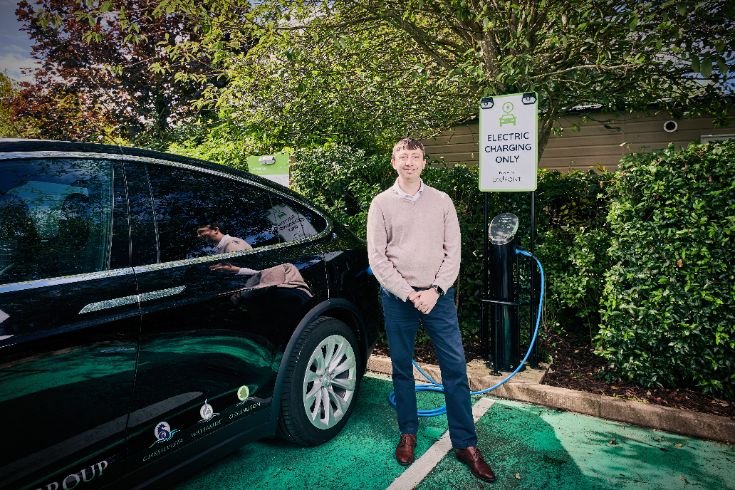
Waterside Holiday Park
See how Waterside Holiday Group is becoming more sustainable thanks to energy saving technology.
Project overview
In 2021, the Talk About Trust installed solar panels on the roof of their new-build (a charity café, community space and public toilets), battery storage to maximise benefits from their panels, and an air-source heat pump to heat the space.
By including these low-carbon measures in the new-build the overall carbon footprint of the building is expected to be 33% lower than if they hadn’t, saving over 4 tonnes of CO2e a year and an estimated £1.8K in running costs.
Getting started
The Talk About Trust is a Dorset based charity that trains teachers, school nurses and youth workers to deliver health education to young people.
For the last decade the charity’s team has worked out of a converted garden garage. Through extensive efforts, the team raised the funds to build a new office space to deliver their services. This new space now houses their head office, a community café, public toilets and a community room.
When planning this build, the Talk About Trust consulted with the local school, residents, and landowner Duchy of Cornwall. And it was agreed that sustainability would be central to the build. Low Carbon Dorset were able to provide invaluable advice and funding to help the charity do this.
Solar PV
To ready themselves for a low-carbon future, the Talk About Trust were keen to incorporate solar panels into their build. However, the aesthetic restrictions in place in Poundbury meant that standard solar panels would not be permitted. But an alternative, albeit more expensive, option was found in the form of low impact, in-roof PV panels (these are sometimes referred to as roof-integrated panels).
According to the suppliers, these panels are expected to generate around 5,970 kWh of electricity a year. It’s anticipated the charity will use about 70% of the energy they generate with the remainder exported to the grid. If this self-consumption estimate is correct, the charity will save over £1,000 a year in electricity costs**. They may also make some money for the energy they export to the grid through the Smart Export Guarantee (SEG) scheme – how much they will earn will depend on the price per kWh their energy supplier offers. The best rate currently available (May 22) is through Octopus Energy’s fixed tariff which offers 7.5p for every kWh exported.
The installation of solar PV on the roof of the PiP is estimated to save around 3 tonnes of CO2e a year, and provide around a third of their energy requirements.
Battery storage
In addition to the solar panels, the Talk About Trust also decided to invest in a Tesla Powerwall battery. This battery storage allows them to make the most of the energy they are generating. The Powerwall stores energy generated from the panels (up to 13.5 kWh) which can then be used when they are not generating on very cloudy days or at night.
The financial savings from solar PV depend on how much of the energy generated is used and how much needs to be exported to the grid. This is because the price you pay to import electricity from the grid is significantly higher than the price you get paid for exporting/selling electricity to the grid.
Battery storage gives greater control over how and when you use the energy you generate, allowing you to replace electricity bought from the grid with the free electricity your panels are generating. It also provides a back-up in the case of power cuts and ensures the café’s fridges and freezers keep running.
Although batteries are currently expensive, the cost of this technology is falling and it is expected to become more affordable in the coming years as battery systems are more widely adopted.
Air-source heat pump
Mindful that the burning of gas will eventually need to be phased out, the Talk About Trust were keen to avoid connecting their new pavilion to the gas network. This left them with two choices for heating: electric heaters or a heat pump system. To further reduce the environmental impact of the building, the charity opted to install an air-source heat pump. The high levels of insulation in the building will be well suited to a heat pump which will use electricity to provide heating far more efficiently than the standard electric panel radiators.
The installation of the air-source heat pump instead of electric panel heating will save over a tonne of CO2e a year.
The heat pump cost around £10.4K to install and is expected to need about 730 kWh of electricity to power through the year. But how does this compare to the alternative option of electric panel radiators? It is estimated that electric panel radiators would use around 3,350 kWh a year of electricity to heat the same space. This means the charity can expect to save an estimated £735** a year in electricity costs by installing an air-source heat pump instead of electric heating.
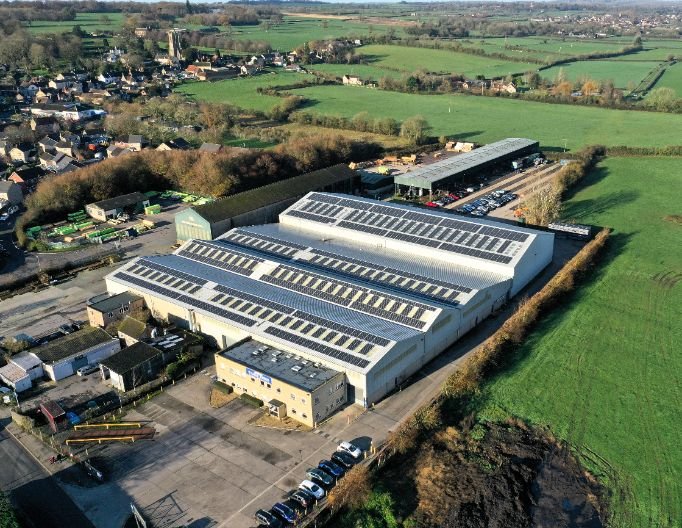
William Hughes Group
Find out about our largest funded solar project at the William Hughes factory.
Project overview
William Hughes is a Dorset based designer and manufacturer of custom-made springs, wire forms and assemblies for the automotive and aerospace industries. The firm currently occupies a factory in Stalbridge, Dorset.
In 2020, William Hughes installed a 400kW solar PV array on their factory’s expansive roof. This installation of 1,130 solar panels was part funded by Low Carbon Dorset and will provide around 25% of William Hughes’ electricity demand. The installation of renewable energy at the site will protect the firm from rising electricity prices and reduce their carbon footprint by 195 tonnes of CO2e.
Getting started
William Hughes first approached Low Carbon Dorset for support in September 2019. The North Dorset based firm had already recognised the potential benefit of installing solar PV but needed financial support to get the project up and running.
Prior to seeking support, William Hughes had already taken steps to improve the energy-efficiency of their site, an important thing to do before installing any renewable energy. These measures included switching to LEDs, installing occupancy sensors (to ensure lights aren’t left on when spaces aren’t being used), and updating their process machines.
Solar PV
A site visit from Low Carbon Dorset’s technical officer confirmed that the Stalbridge site and William Hughes’ current electricity demand would make an excellent financial and environmental case for installing solar PV. Low Carbon Dorset was able to offer a grant to cover 40% of the project costs.
The installation of the panels was originally scheduled for summer 2020, but the project came to a rapid holt when the Covid-19 pandemic hit. But, as restrictions began to lift, they quickly got the project back on track and the installation was rescheduled for October of the same year.
1,130 panels were installed on the available factory roof space in Stalbridge. The system will generate 378,412kWh of useable electricity per year, around 71% of which will be consumed onsite by William Hughes.
Thanks to the ‘Solar Edge’ software provided by the installer of the panels, William Hughes can monitor how much energy their array is generating day-to-day, versus the amount they are consuming. It even shows them how much electricity they are exporting to the grid daily.
According to the installer (Clean Earth Energy), William Hughes will pay an equivalent forward buying price of just over 3p per kWh for the system’s 25-year lifetime. On average UK manufacturers pay 9p per kWh**, which means William Hughes will save around £35k in electricity costs in the first year alone.
The full cost of this installation would take 6 years to pay for itself, with the help of a Low Carbon Dorset grant this payback period has been reduced to just under 4 years.
**Source: BEIS report, September 2020
Other recommendations
During the site visit it was identified that, although most lights in the factory had been switched to LEDs, there were still some old light fittings in storage and office spaces. Further savings could be made by switching all lights to LEDs.
Another future opportunity for William Hughes may lie in battery storage technology. Battery storage is currently expensive in comparison with the savings offered, but this is likely to change in the next 2-5 years. When this happens individuals and organisations that have fitted PV may choose to add storage to maximise the benefits they receive from their PV arrays by using more of their own electricity and generating further income through Demand Side Response (DSR) schemes.
“Setting up a large roof top photo voltaic (PV) array for a factory is more complicated than it might appear. The new loads on the roof must be considered, the setting up of structures within the organisation to administer the array takes time, and deciding between numerous potential installers in a fair and objective way is not always simple. The fact that William Hughes has stuck to their guns during the Covid-19 pandemic, shows a remarkable determination to achieve the very significant carbon savings produced, not to mention the confidence to commit to their large share of the cost. It is very important that more follow where they have led.”
Dr Erik Blakeley, Technical Officer – Low Carbon Dorset
Dr Erik Blakeley, Technical Officer – Low Carbon Dorset
*CO2e, or carbon dioxide equivalent, is a term used to describe different greenhouse gases in a common unit. For any quantity and type of greenhouse gas, CO2e signifies the amount of CO2 which would have the equivalent global warming impact. And allows us to express a carbon footprint consisting of lots of different greenhouse gases as a single number.
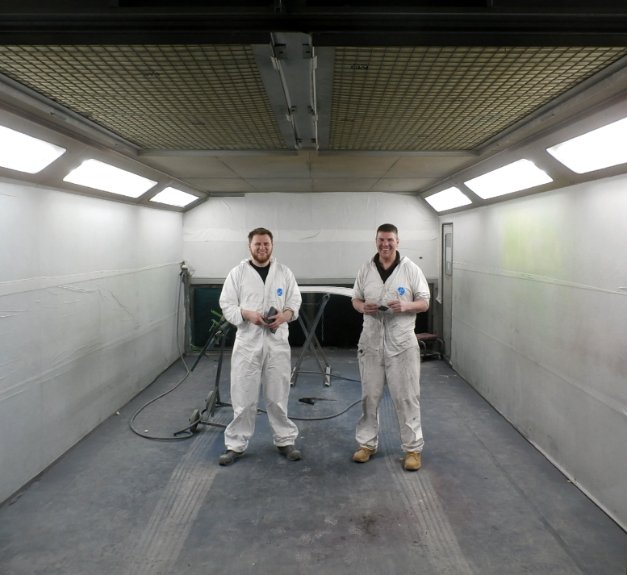
Nuffield Accident Repair
Find out how the repair centre is benefitting from new lights.
Project overview,
Nuffield Accident Repair is a vehicle bodyshop based in Poole offering accident and crash repair services. With an inefficient light system desperately in need of upgrading, Nuffield decided to replace 13 old lights with 17 LEDs as part of this low-carbon project. This switch reduced their carbon footprint by 3 tonnes of CO2 a year and will save them an annual £600 off their energy bills.
Getting started
Much of the garage’s work involves high-levels of detail, where quality of light can have a huge impact. So, when Nuffield’s existing light system began to fail the decision was made to upgrade. Keen to switch to LED lighting, but constrained by the cost, they reached out to Low Carbon Dorset to find out what support was available to make the switch.
LED lighting
LED lighting is a well-recognised way of considerably reducing carbon emissions and energy bills. And in recent years the technology has developed to provide a very wide range of colours and styles making it very useful for fine work, like that undertaken at Nuffields.
It was quickly highlighted in their energy report from Low Carbon Dorset, that Nuffield could benefit greatly from replacing their lights with LED equivalents. So, in an upgrade which saw 13 lights be replaced with 17 LEDs, Nuffield were able to reduce their carbon footprint by 3 tonnes of CO2 at a cost of £2,756. The savings that Nuffield will make on their energy bills each year (£600) combined with the grant from Low Carbon Dorset for just over £1k, will mean these lights will pay for themselves in under 3 years.
Other recommended measures
Additional measures recommended which could reduce the garage’s emissions further included switching their currently compressed air tooling to electric equivalents. It was also recommended that the firm investigate the possibility of installing solar PV panels on the roof of the bodyshop to generate electricity to meet their own demand. The opportunity for Nuffield to apply for additional grants to help fund these measures will remain open until the end of the Low Carbon Dorset programme.
Blakell Europlacer
Learn about Blakell Europlacer's boiler replacement and lighting upgrade.
Project overview
Blakell Europlacer is a surface mount equipment manufacturer with a high energy consumption and costly electricity bills. In a bid to reduce their energy use and improve the quality of lighting and comfort of staff, this Poole based business installed 92 high efficient LED light fittings, and replaced an old boiler with a highly efficient new fully-condensing gas boiler. These measures alone have saved them thousands of pounds a year and reduced their carbon footprint by nearly 40%!
Getting started
Concerned about energy being wasted through old lights and heating, Blakell Europlacer contacted Low Carbon Dorset for help to fund more efficient replacements.
Low Carbon Dorset’s technical officer Erik visited their factory and offices in Poole to assess all energy saving opportunities for the firm. From this visit Erik was able to produce an energy saving report specific to Blakell Europlacer which confirmed LED lighting and a boiler upgrade as the two top measures which would make the company the largest savings in both their bills and carbon emissions.
LED lighting
117 old light fittings (including high bay lights, floodlights, panel lighting and spotlights) were replaced with 92 highly efficient LED light fittings. This swap alone is estimated to save Blakell Europlacer £10,830 a year on electricity costs, and 35 tonnes of CO2! The lights and fitting cost £24k – with a 40% grant from Low Carbon Dorset this was reduced to £14,630. At this cost it will take just over a year for the LEDs to pay for themselves!
Boiler replacement
Existing heating in the factory and offices was powered by a relatively inefficient HMS Regency Slimline boiler (efficiency estimated at around 75%). This was replaced by an Ideal Commercial Evomax 80kW fully condensing gas boiler which is estimated at 107.5% efficient when fully condensing. As the boiler will never be able to run continuously in condensing mode its efficiency has been estimated at 95%. Replacing the boiler cost £6,395 and will reduce Blakell Europlacer’s carbon emissions by a further 2.6 tonnes of CO2 a year and save around £500 a year on bills.
Other recommended measures
Further recommendations to reduce energy use and carbon emissions included investigating the possibility of installing solar PV panels on the factory roof. The factory and offices’ high energy demand during the day means financial and energy savings would be likely.
Project overview
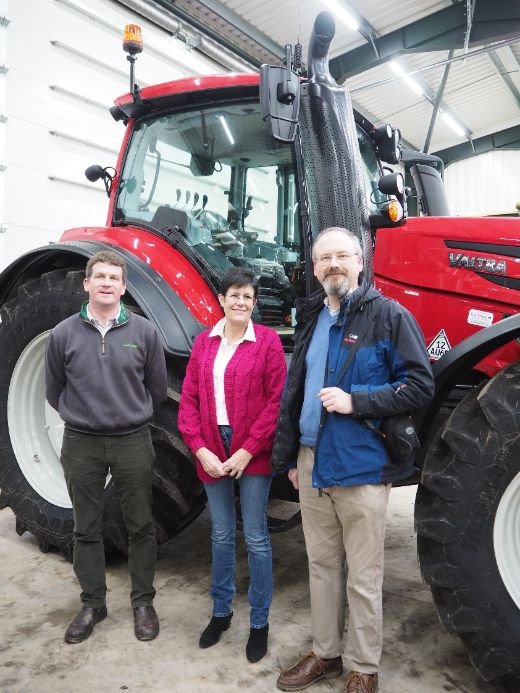
CJ Cox Ltd is a Dorset based agricultural engineer firm. Located on the outskirts of Sturminster Newton, the CJ Cox headquarters is made up of a collection of steel framed buildings with pitched roofs and limited access to natural lighting. With long operating hours most of the site buildings require lighting throughout the whole day.
In a bid to reduce energy costs CJ Cox replaced 162 light fittings throughout their premises with 159 LED equivalents. This switch reduced their carbon footprint by over a third, saving 7 tonnes of CO2 and around £1,800 a year!
Getting started
With a new workshop space in need of lighting, and existing light systems in desperate need of upgrading, CJ Cox were keen to explore how LEDs could help them save on costs and energy. So, they contacted Low Carbon Dorset for a free energy report to identify what switching would mean for them. The report was able to provide CJ Cox with an estimate of the savings they could make, as well as the kind of investment required. It also highlighted other energy efficiency and renewable energy opportunities specific to their operations and premises which could help them reduce their energy use further.
Armed with this information, and the opportunity to apply for up to 40% grant funding for the work, CJ Cox set about contacting installers for quotes to upgrade their lighting system.
LED lighting
The predominant form of lighting within CJ Cox’s workshops, offices and store prior to the upgrade was fluorescent tube lighting and high-bay high-wattage lights. This project saw the replacement of these old inefficient light fittings (162) with highly-efficient LED equivalents. The upgrade cost £14,281 in total. With the help of a £4,380 grant and annual savings of around £1,800 this investment will pay for itself in just over 5 years.
Other recommended measures
Further recommendations made in their Low Carbon Dorset energy report included the installation of a small solar PV rooftop array to meet the electricity demand of the workshops, offices and shop, the expansion of their existing biomass fuelled heating system, and an upgrade to more efficient appliances. The opportunity for CJ Cox to apply for further grants from Low Carbon Dorset to carry out any of these recommendations will be available for the remaining duration of the programme whilst funds allow.
Canford Manufacturing
Discover the impact of LED lighting at Canford Manufacturing.
Project overview
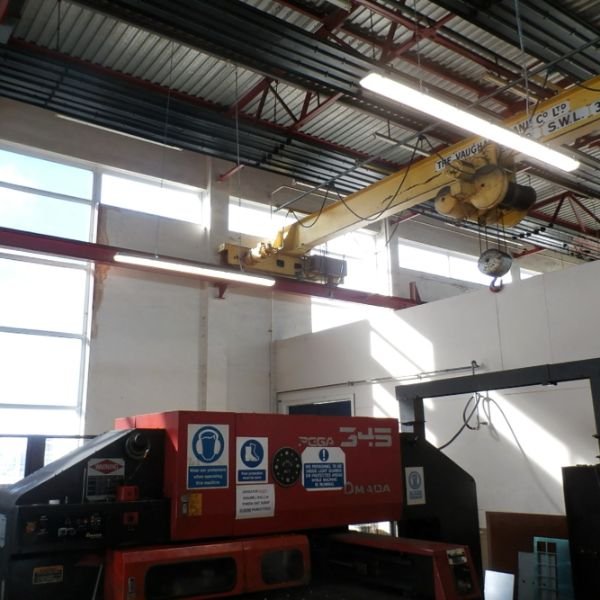
From Canford Manufacturing’s factory in Portland, the firm produces and manufactures an extensive range of equipment for the audio video and communications market. With a large factory floor area, long operation hours, and limited natural light Canford manufacturing were an ideal candidate for an LED lighting upgrade. By switching to LEDs the company will save a huge £2.9k on bills each year, and 10 tonnes of CO2 from their annual emissions.
Getting started
The Canford Manufacturing factory was originally a MOD building, but during their time on the site Canford has made some major improvements to the building’s roof insulation, double-glazing and heating system. The company has also invested in upgrading a proportion of their lighting to LEDs.
Keen to upgrade the remaining lights to LEDs, but struggling with limited funds, Canford applied to Low Carbon Dorset for support. An energy report carried out on-site confirmed that switching the remaining lights to LEDs would make large financial and energy savings.
LED lighting
The large floor area and limited natural light in the factory means there were huge demands on the company’s existing lighting system. By replacing 102 old inefficient light units with 119 LEDS Canford were able to make significant savings in energy bills and carbon emissions. The cost to upgrade the lights was just under £12k, but with a £4.8k grant from Low Carbon Dorset this brought the project cost down by 40% to £7k. This cost will be repaid in just over 2 years by the money saved in electricity bills thanks to the massive reduction in energy needed to power the new LEDs compared to the old lights.
Other recommended measures
Many of the standard energy efficiency measures had already been done by Canford, but opportunities to reduce their carbon footprint further could include installing a solar PV array on the factory roof, conducting a leak survey on their compressed air system and the fitting of inexpensive radiator reflectors to external wall radiators.
Bridport Leisure Centre
Uncover the benefits of the new LED lighting at Bridport Leisure Centre.
Project overview
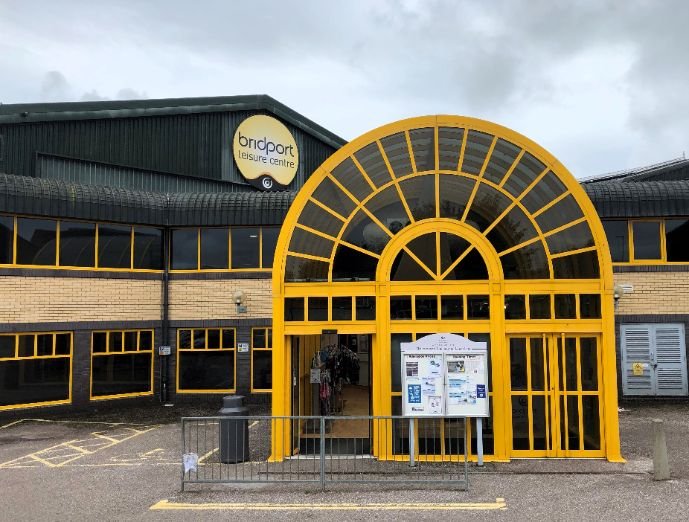
Bridport Leisure centre is a busy facility offering a wide range of activities to the local community. In order to reduce their extremely high energy demand the sports trust replaced the old light fittings in their sports hall and squash courts with 34 highly efficient LEDs.
Getting started
Over the past decade the Bridport & West Dorset Sports Trust has invested in a number of energy efficiency and renewable energy measures to reduce the centre’s high gas and electricity demand. These have included a heat recovery system in the pool, boiler upgrades, new pool covers, energy efficient water pumps and LEDs. All of which have amounted to huge savings (45% reduction in electricity and 32% reduction in gas use). But with a carbon footprint of still over 400 tonnes of CO2 a year, more was needed. With this in mind the Sports Trust contacted Low Carbon Dorset for help to explore further energy saving opportunities.
LED lighting
In an earlier drive to be more efficient some of the centre’s lighting was switched to LEDs. It was quickly recognised that further carbon and cost savings could be made by converting the remaining lights in the sports hall and squash courts. 34 LEDs were installed at a cost of £13k. With the help of a grant from Low Carbon Dorset to cover 40%, the LEDs will pay for themselves in just over 2 years. After this the sports trust will reduce its energy bill by £3.4k each year!
Other recommended measures
Potential opportunities for further energy savings were highlighted in the leisure centre’s energy report. These included further investigation into more solar PV panels on the centre’s available roof space. There may also be potential for further savings by exploring alternatives to the centre’s heating and air handling systems.
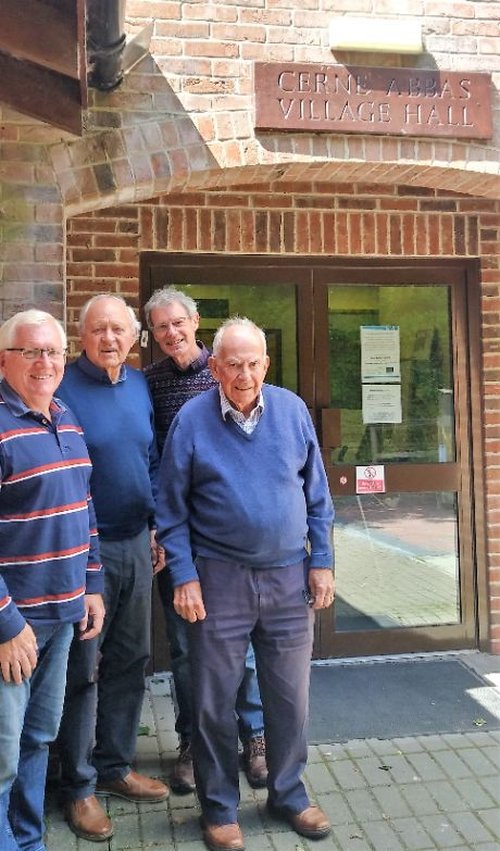
Cerne Abbas Village Hall
Find out how solar panels and LEDs are enhancing Cerne Abbas Village Hall.
Project overview
As part of Cerne Abbas Village Hall’s plans to become carbon neutral they installed a 20 kWp solar PV array on their south facing roof space. And replaced old fluorescent light fittings with 68 highly efficient LEDs.
Getting started
Spurred on by a rise in environmental awareness, the committee of Cerne Abbas village hall decided it was time to act and do their bit to steer the village towards a zero-carbon future. Unsure of what needed to be done to achieve this they reached out to Low Carbon Dorset for guidance. After a site-visit, Low Carbon Dorset technical officer Erik produced an energy report for the committee which listed recommendations on how to reduce energy use and costs. This gave the committee members a good understanding of what needed to be done and they set about contacting local suppliers and gathering quotes.
Solar PV panels
One of the biggest opportunities to reduce the carbon emissions of the hall was to take advantage of its south facing roof by installing solar panels. It was estimated that the roof could fit a 20 kWp array, double what the hall used on a day-to-day basis. Any excess electricity generated by the panels would feed in to the national grid (unfortunately at no financial gain to the hall as the feed-in-tariff scheme (FITs) ended prior to the project beginning). Regardless of the lack of financial incentive the committee made the forward-thinking decision to install as many panels as their roof could take and maximise their electricity generation.
When the price of battery storage comes down, they plan to invest in a battery so they can make the hall self-sufficient in its energy use. This will involve storing any excess energy generated in peak times and using it when their panels are not generating as much in the evenings and winter months.
The panels are estimated to save around 9 tonnes of CO2 each year and cost £18,800. Low Carbon Dorset provided a grant to cover 40% of this cost.
LED lighting
With the potential to reduce the energy used by the hall’s lighting by 90%, a switch to LEDs was a no brainer for the village hall committee. They replaced 78 low efficiency fluorescent lights fittings with 68 LEDs at a cost of £19,050 (40% of this cost was paid for by a Low Carbon Dorset grant). This measure alone will save 11 tonnes of CO2 and £2.2k in energy bills each year!
Other recommended measures
Further recommendations were made in the hall’s energy report which included turning down room thermostats to below 20°C, further ceiling insulation and an additional standing induction hob to reduce the gas used for cooking. The committee can apply for additional grants from Low Carbon Dorset to help fund any of these measures up until June 2020.
A word from the wise
Here’s what Cerne Abbas Village Hall’s committee had to say about their project:
Installation of equipment
To maximise our energy generation from solar power 66 Solar PV panels were fitted on the roof giving 20kWp PV. This was the maximum possible output for the available roof space. Inside the hall the original 78 low efficiency fluorescent light fittings were replaced with 68 LED fittings.
Issues encountered
As both Solar PV and LED lighting installations are so common these days, with known and proven technology, we experienced no real issues with them.
Benefits
The benefits of us fitting Solar PV and LEDs into the hall is that we reduce our greenhouse gas emissions by an estimated 19.61 tonnes of CO2 per year. At the same time, we will reduce the hall’s annual energy bill.
Lessons learned
As we were given expert help and advice by Low Carbon Dorset from the start, we did not experience any problems. We used well respected suppliers of Solar and LEDs who offered expert advice. There are no reasons for us to do things differently.
Our project
This project is a major step towards making the building carbon neutral, as the 20 kWp PV array has been sized to give maximum low carbon electricity generation. The fitting of LED lighting will simultaneously reduce our demand for energy. It is our ambition to take this further as the technology advances to fit battery storage and become totally carbon-neutral. We believe this project is a model of what can be done by community organisations and businesses towards reducing carbon emissions.
The support we received from Low Carbon Dorset was invaluable, their knowledge and expertise helped quantify our goals on energy efficiencies and their guidance helped us to attain tangible results.
Charlton Marshall Village Hall
Charlton Marshall community's new low-carbon village hall.
Project overview
Charlton Marshall had a very busy, but very old village hall. Housed in a wooden building built in the mid 1930’s, it was expensive to run, and not fit for purpose. So, they decided as a village to build a new low carbon one.
The new hall will have LED lighting throughout, better-than-needed insulation, an 8kW air-source heat pump to provide most of the heating, and a 6kW array of Solar PV Panels. These energy efficiency measures will far excel building regulations, and its carbon footprint is 30% smaller than the hall it will replace!
Getting started
As part of fundraising for the new hall there was a requirement for public consultation. A major theme in the response from the village was that they wanted the new building to be low-carbon. With this in mind, they set about designing the building with a local architect and contractor.
Once designed, Charlton Marshall got in touch with Low Carbon Dorset to seek funding for the hall’s low carbon measures. Ideally Low Carbon Dorset would have been involved from the off to advise and shape the designs for maximum carbon savings. But we were still able to offer some additional energy saving recommendations, which included a 6kW solar array to power the hall’s hybrid air-source heat pump, additional insulation, and LED lighting throughout.
The village were then able to apply for a Low Carbon Dorset grant to cover 40% of the costs of these measures.
Hybrid air-source heat pump
The building has been designed with a hybrid air-source heat pump (including a gas combi boiler). This will provide the under-floor heating throughout the building.
Solar PV panels
The 6kW array of Solar PV panels will take advantage of the sun on the hall’s south facing roof. These panels will power the building’s air source heat pump.
LED lighting
All of the lighting throughout the building is LED, which drastically reduces the energy output.
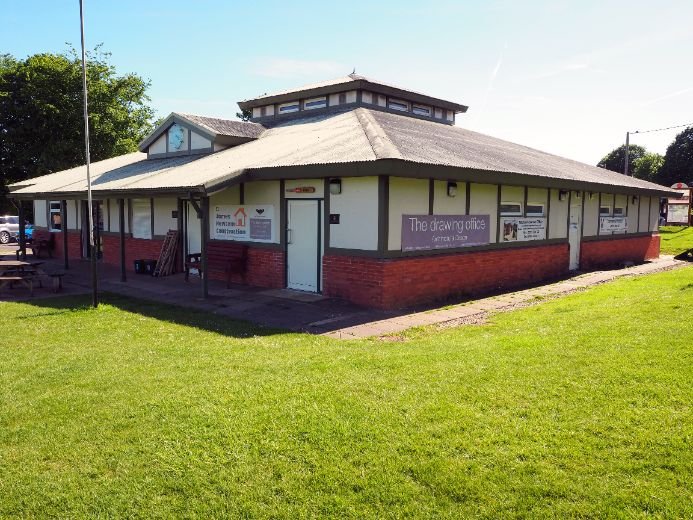
Dorchester Town Council
Explore the exciting retrofit of Dorchester's cricket pavilion.
Project overview
In the spring of 2021, Dorchester Town Council carried out a deep retrofit of their cricket pavilion. The project included installing a borehole-supplied ground-source heat pump (GSHP) with a new internal radiator system, additional roof insulation and new LED lighting. The town council also invested in a water borehole for cricket pitch watering.
This innovative whole-building approach will save an estimated 17 tonnes of CO2e a year and just over £11K in energy costs (with RHI payments factored in) – reducing the overall emissions of the site by 70%.
Getting started
In May 2019, in response to growing public concern, Dorchester Town Council declared a Climate Emergency and set the ambitious target of becoming zero-carbon by 2030 or before.
To achieve this target, the town council identified that they need to significantly reduce the amount of energy their buildings and operations consume – and ensure any energy that is used is produced by renewable sources only.
To put this plan in motion, the town council are carrying out energy efficiency and renewable energy projects at several of their sites. This case study focuses specifically on their efforts to reduce the carbon footprint of the cricket pavilion in Dorchester.
The pavilion building is owned and run by Dorchester Town Council and is hired out throughout the year as a community space, whist being used as a cricket pavilion in the summer.
Ground Source Heat Pump (GSHP)
Prior to this project the heating and hot water in the pavilion were provided by gas and night-storage radiators at a cost of around £5,800 a year.
Inspired by the Powering Parks report produced by ‘We are Possible’, Dorchester Town Council were keen to explore how they could use the large green space next to their building to decarbonise their heat demand.
Powering Parks highlights the potential to take heat from the ground under green spaces and parks and use it to warm surrounding buildings. This is done using a ground-source heat pump which extracts the low temperature ambient heat from the ground, concentrates it, and then pumps it into buildings to warm them. This simple YouTube video explains how.
Heat pumps run off electricity and are very efficient – for every unit of electricity you put in you get up to five units of heat out. The installation of a ground-source heat pump at the pavilion eliminates the need for gas and uses far less electricity than the night-storage radiators it is replacing. It is expected that this new heating system will reduce the pavilion’s energy demand by over 20,000 kilowatt hours a year, saving the town council around £5,100* in energy bills and reducing the footprint of the building by an estimated 11 tonnes of CO2e annually.
As heat pumps are classed as renewable energy and the install happened before March 21, the town council are also able to claim Renewable Heat Incentive (RHI) payments for the renewable energy their heat pump produces. It’s estimated that they will receive around £2,100 a year for this (please note this scheme has now closed to new applicants).
There are currently only a handful of public parks in the UK that are exploiting their ground heat – and Dorchester Town Council hope that this project will help champion heat-pump technology and inspire others to tap into this opportunity for low-carbon heat.
Insulation and LEDs
To reach their net-zero target, it is important that the town council also focuses on the energy efficiency of their buildings. By improving energy efficiency this will reduce the amount of renewable energy they need to source.
It was quickly identified that the pavilion could benefit from swapping their old lighting for LEDs. This simple measure is expected to save 2 tonnes of CO2e and over £1,300* a year in electricity costs.
The council also made further improvements to the efficiency of the building by investing in insulation for the pavilion roof. This is expected to save a further 3 tonnes of CO2e and knock an additional £1,800* off their annual energy bills.
Water borehole
Another source of emissions at the pavilion is the water required to keep the cricket pitch properly irrigated; prior to this project this was sourced from their mains-water supply. A huge amount of energy is needed to make mains water drinkable – a requirement that is not needed for watering cricket pitches.
To tackle the emissions from the pavilion’s water demand, Dorchester Town Council installed a borehole at the site. This provides the water needed for irrigation with none of the associated emissions. This measure is estimated to save 1 tonne of CO2e a year.
This innovative project at the cricket pavilion shows the scale of savings that can be achieved when a whole-building approach is taken. By addressing the amount of energy they use as well as where they source it from, Dorchester Town Council has been able to drastically reduce their carbon footprint and their energy costs.
*CO2e, or carbon dioxide equivalent, is a term used to describe different greenhouse gases in a common unit. For any quantity and type of greenhouse gas, CO2e signifies the amount of CO2 which would have the equivalent global warming impact. And allows us to express a carbon footprint consisting of lots of different greenhouse gases as a single number.
**Financial savings for LEDs and insulation measures are based on current average electricity price of 28p per kWh (May 22), financial savings for GSHP are based on average energy price of 25p per kWh to account for price difference in gas and electricity.
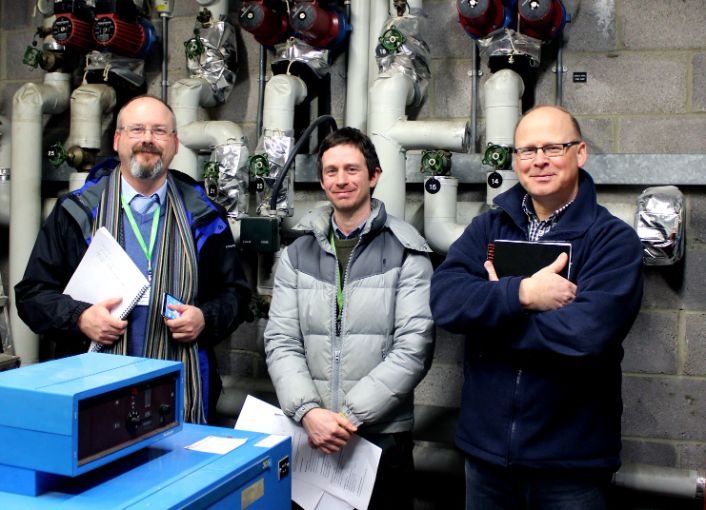
Dorset History Centre
Learn about the innovative passive air handling project.
Project overview
In a bid to reduce the high energy costs of housing historic archives, Dorset History Centre has become one of the first institutions of its kind to move to a largely passive air-handling system. This innovative approach involved improving the air tightness of the structure of the building and replacing existing air handling and heating systems with much simpler smaller scale systems better suited to minimal heating and humidity control.
It is expected that this project will save the centre around 90 tonnes of CO2e and £20k in energy costs each year, reducing their electricity energy consumption by 80%.
Getting started
Dorset History Centre is the archives service and local studies library for Bournemouth, Christchurch, Dorset and Poole. Back in 2012, driven by their very high energy costs, the Dorset History Centre team started looking at how they could better deal with the requirements of housing their archives. The idea of passive technology to reduce energy usage was first suggested to them by buildings physicist Tim Padfield. This prompted the Centre to commission a full report into retrofitting their building to take a much more ‘passive building’ approach, which had the potential for considerable energy cost savings. The team then contacted the architects behind the construction of a new passive building Archive Centre in Herefordshire who confirmed that a passive environmental control scheme would be technically possible for the Dorset History Centre in Dorchester. It was the combination of these reports, and the evidence they provided on a passive-building approach, which prompted the centre to contact Low Carbon Dorset.
Passive air-handling system
This innovative approach sought to make the fabric and structure of the Dorset History Centre airtight – essentially sealing walls with impermeable paint and filling cracks to prevent air ingress/egress. Making the Centre a more stable environment in terms of temperature and humidity. Two new closed radiator systems with lower energy requirements were installed – and are also quite unusual to find in an Archive building.
The scheme has been project managed through Dorset Council (as the building owner). There has been a minor teething problem in one small part of the building which is being resolved. Overall, it has worked well, proving that this novel approach can work in an Archive setting.
This innovative project has reduced the History Centre’s electricity energy consumption by about 80%. Before, annual energy costs for electricity and gas were around £30,000. Now they are down to about £5-10,000. The Centre already benefits from a solar PV array on the roof (installed about six years ago) so sometimes they can be virtually cost neutral on electricity costs.
The novel approach taken at the Dorset History Centre is one that other archive services could learn from, and the team has already received requests from other centres in the UK wanting to know more about their project.
Other recommended measures
The Low Carbon Dorset report highlighted other actions that could also be taken, such as installation of heat pumps and further use of LED lighting. Opportunities are now being explored by the History Centre team to take these forward and build on the benefits that the Low Carbon Dorset supported scheme has made.
*CO2e, or carbon dioxide equivalent, is a term used to describe different greenhouse gases in a common unit. For any quantity and type of greenhouse gas, CO2e signifies the amount of CO2 which would have the equivalent global warming impact. And allows us to express a carbon footprint consisting of lots of different greenhouse gases as a single number.
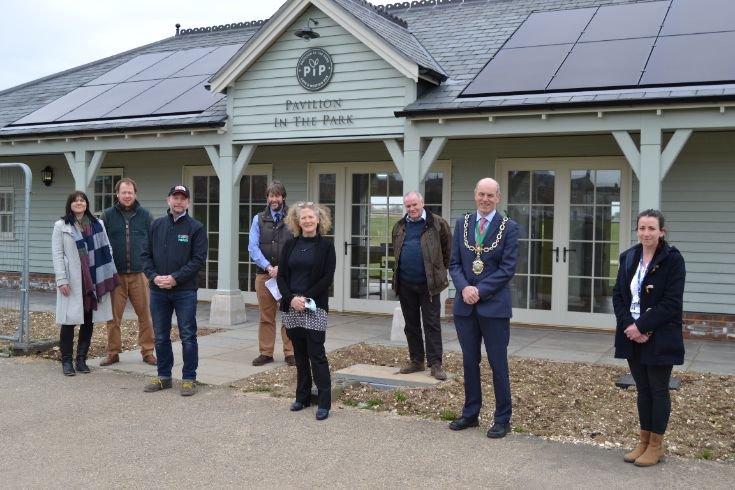
The Talk About Trust
Discover how renewable energy is transforming the Pavilion in the Park.
Project overview
In 2021, the Talk About Trust installed solar panels on the roof of their new-build (a charity café, community space and public toilets), battery storage to maximise benefits from their panels, and an air-source heat pump to heat the space.
By including these low-carbon measures in the new-build the overall carbon footprint of the building is expected to be 33% lower than if they hadn’t, saving over 4 tonnes of CO2e a year and an estimated £1.8K in running costs.
Getting started
The Talk About Trust is a Dorset based charity that trains teachers, school nurses and youth workers to deliver health education to young people.
For the last decade the charity’s team has worked out of a converted garden garage. Through extensive efforts, the team raised the funds to build a new office space to deliver their services. This new space now houses their head office, a community café, public toilets and a community room.
When planning this build, the Talk About Trust consulted with the local school, residents, and landowner Duchy of Cornwall. And it was agreed that sustainability would be central to the build. Low Carbon Dorset were able to provide invaluable advice and funding to help the charity do this.
Solar PV
To ready themselves for a low-carbon future, the Talk About Trust were keen to incorporate solar panels into their build. However, the aesthetic restrictions in place in Poundbury meant that standard solar panels would not be permitted. But an alternative, albeit more expensive, option was found in the form of low impact, in-roof PV panels (these are sometimes referred to as roof-integrated panels).
According to the suppliers, these panels are expected to generate around 5,970 kWh of electricity a year. It’s anticipated the charity will use about 70% of the energy they generate with the remainder exported to the grid. If this self-consumption estimate is correct, the charity will save over £1,000 a year in electricity costs**. They may also make some money for the energy they export to the grid through the Smart Export Guarantee (SEG) scheme – how much they will earn will depend on the price per kWh their energy supplier offers. The best rate currently available (May 22) is through Octopus Energy’s fixed tariff which offers 7.5p for every kWh exported.
The installation of solar PV on the roof of the PiP is estimated to save around 3 tonnes of CO2e a year, and provide around a third of their energy requirements.
Battery storage
In addition to the solar panels, the Talk About Trust also decided to invest in a Tesla Powerwall battery. This battery storage allows them to make the most of the energy they are generating. The Powerwall stores energy generated from the panels (up to 13.5 kWh) which can then be used when they are not generating on very cloudy days or at night.
The financial savings from solar PV depend on how much of the energy generated is used and how much needs to be exported to the grid. This is because the price you pay to import electricity from the grid is significantly higher than the price you get paid for exporting/selling electricity to the grid.
Battery storage gives greater control over how and when you use the energy you generate, allowing you to replace electricity bought from the grid with the free electricity your panels are generating. It also provides a back-up in the case of power cuts and ensures the café’s fridges and freezers keep running.
Although batteries are currently expensive, the cost of this technology is falling and it is expected to become more affordable in the coming years as battery systems are more widely adopted.
Air-source heat pump
Mindful that the burning of gas will eventually need to be phased out, the Talk About Trust were keen to avoid connecting their new pavilion to the gas network. This left them with two choices for heating: electric heaters or a heat pump system. To further reduce the environmental impact of the building, the charity opted to install an air-source heat pump. The high levels of insulation in the building will be well suited to a heat pump which will use electricity to provide heating far more efficiently than the standard electric panel radiators.
The installation of the air-source heat pump instead of electric panel heating will save over a tonne of CO2e a year.
The heat pump cost around £10.4K to install and is expected to need about 730 kWh of electricity to power through the year. But how does this compare to the alternative option of electric panel radiators? It is estimated that electric panel radiators would use around 3,350 kWh a year of electricity to heat the same space. This means the charity can expect to save an estimated £735** a year in electricity costs by installing an air-source heat pump instead of electric heating.
Project overview
LogoBugs is a trade only supplier of promotional merchandise based in Christchurch. Their factory space has low levels of natural light, a large light demand and long operational days, making it an ideal candidate for an upgrade to LEDs. In a drive to reduce bills and environmental impact the firm replaced 111 light fittings with 98 LEDs. This upgrade reduced their carbon footprint by 25% and will save them just under £3k a year!
Getting started
With their old inefficient lighting in desperate need of replacing, LogoBugs approached a local supplier for quotes to carry out the work. Here they learnt about the financial and environmental benefits of upgrading to LED lighting. With this recommendation they contacted Low Carbon Dorset to find out what support was available to help fund the switch.
After a detailed energy report conducted by Low Carbon Dorset’s technical officer Erik, it was clear that LEDs would be a great opportunity to make large carbon and cost savings for the firm.
Already a member of the Woodland Trust’s Carbon Capture Programme, this move to LEDs helps LogoBugs reduce their environmental impact further and at the same time saves money on their bills.
LED lighting
As with many factory environments, LogoBugs’ working areas are artificially lit throughout the entire working day. Most of these lights are fluorescent tubes, with a small amount already upgraded to LEDs. The upgrade of all of LogoBugs’ remaining lighting involved replacing 111 fittings with 98 LED equivalents at a cost of £8,633.58. Grant funding from Low Carbon Dorset brought this spend down to £5,180. The annual savings made from reduced electricity costs will pay back this investment in just under 2 years.
Other recommended measures
Other opportunities which could help reduce LogoBugs’ carbon emissions include the possible installation of solar PV panels on their roof space, and, depending on the size of the PV array installed, potential battery storage opportunities. LogoBugs can apply for additional grants for any of these measures until the close of the Low Carbon Dorset programme.
*CO2e, or carbon dioxide equivalent, is a term used to describe different greenhouse gases in a common unit. For any quantity and type of greenhouse gas, CO2e signifies the amount of CO2 which would have the equivalent global warming impact. And allows us to express a carbon footprint consisting of lots of different greenhouse gases as a single number.
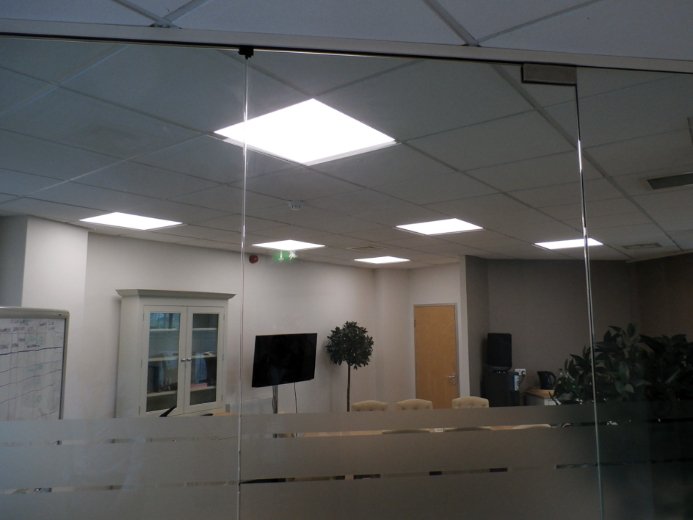
Telesoft Technologies
Discover how Telesoft Technologies is brightening up with LED lighting.
Project overview
Telesoft Technologies, a Blandford based cyber security firm, is a high energy user with annual energy bills of over £100k. As part of strategic decision to reduce their energy consumption they replaced 364 lower efficiency lights with 317 highly efficient LED fittings, reducing their carbon footprint by 32 tonnes of CO2 a year.
Getting started
Telesoft Technologies occupy three buildings in Blandford with no gas connection. This means all heating and cooling is supplied by electricity. With multiple server rooms which need cooling, and office space which needs heating, the firm has an extremely high energy demand.
As part of an organisational drive to become more environmentally friendly and reduce energy costs, Telesoft Technologies contacted Low Carbon Dorset to help identify what they needed to do to reduce their energy demand. In an energy report issued by Low Carbon Dorset, a comprehensive list of energy efficiency and renewable energy measures were recommended.
LED lighting
The existing light fittings in the buildings were mostly compact fluorescents and halogen spot lights. It was identified that this could be an area for huge potential energy savings. After seeking advice from a specialist supplier, it was estimated that a switch to LEDs could reduce Telesoft’s lighting costs and energy use by 74%. With the help of a grant to cover 40% of the cost of the switch Telesoft replaced 364 old light fittings with 317 highly efficient LEDs. The installation and bulbs cost £23k, Telesoft received a grant of £9k to go towards this cost. It is estimated that it will take a year and a half for the lights to pay for themselves with the help of this grant.
Other recommended measures
As a large proportion of Telesoft’s energy demand comes from its need to cool its server rooms. Further recommendations focused on reducing this demand and included upgrading the existing reversible air source heat pump system and controls to a newer more efficient system. Introducing ambient cooling, which alone could save 80% on their server room cooling expenses, and insulating windows in server rooms to exclude solar gain was also recommended. Telesoft’s 24/7 energy demand also makes them an ideal candidate to maximise the benefits from Solar rooftop PV.